Sports nutrition can quickly become an expensive hobby. Store shelves are packed with powders, capsules, and “advanced” formulas, but only a small fraction of sports supplements are backed by reliable scientific evidence. In the Anatoly Fit system, supplements aren’t considered the foundation of progress at all. The main emphasis is always on healthy eating and the right strength training approach.
However, the topic itself can be quite interesting and useful, especially for beginners. And it’s best to ask one crucial question here: what actually helps, and what is mostly just a clever marketing ploy?
Which Supplements Are Actually Worth Your Money?
Not every dietary supplement deserves the same place in your budget. Evidence-based nutrition starts with one simple question: is there a clear benefit, an appropriate dose, and a valid reason to take it?
Try to figure this out by looking at the most popular ones:
| Category | Examples | Practical verdict |
|---|---|---|
| Strong evidence | Creatine, protein when needed | Worth considering |
| Goal-dependent | Caffeine, omega-3 | Depends on diet and target |
| Deficiency-dependent | Athlete vitamins and minerals | Use when needed |
| Lower priority | BCAA with enough daily protein | Often unnecessary |
This isn't a one-size-fits-all shopping list. The effectiveness of sports supplements depends on what your existing diet, workout routine, and recovery process already entail.
Why Is Creatine Still the First Supplement to Consider?
Creatine remains one of the few dietary supplements whose effectiveness in increasing strength and improving body composition has been confirmed by compelling evidence. A recent meta-analysis of 61 controlled studies showed that taking creatine in combination with strength training increased lean body mass by an average of 1.39 kg. Another large-scale review also found a small but statistically significant improvement in bench press performance, squat strength, and power.
That is precisely why creatine efficacy is easier to substantiate than most claims about dietary supplements. It doesn't replace training, but it can help with performing high-intensity repetitive exercises and long-term adaptation.
Vladimir Shmondenko also takes creatine. As part of his training program, he takes 5 g per day and sometimes follows a cyclical regimen: about two months of use, followed by a two-month break. This is his personal practice, not a rule. Current scientific evidence does not suggest that a cyclical regimen is necessary to maintain the effectiveness of creatine.
Do You Need Whey Protein If You Already Eat Enough Protein?
Whey protein is useful when your regular diet doesn’t meet your daily protein needs. It’s quick to prepare, easy to measure out, and convenient after workouts or on busy days. But it’s still just powdered food — not a quick way to gain muscle mass.
A systematic review and meta-analysis conducted last year showed that whey, when combined with exercise, can help increase muscle protein synthesis. Recent studies also confirm its role when combined with strength training.
This doesn't mean that everyone needs a protein shake. If you're already getting enough high-quality protein from your regular meals, then consuming additional whey protein may not offer any significant practical benefits.
Are BCAAs Worth Buying?
It all comes down from the rest of your nutrition.If you’re already getting enough high-quality protein, then BCAAs definitely shouldn’t be at the top of your list of priorities.
A systematic review conducted by researchers at Imperial College London included 22 studies involving a total of 511 participants. Taking branched-chain amino acid (BCAA) supplements showed some potential for reducing muscle soreness after exercise, but the results regarding strength, endurance, and body composition were inconsistent.
This is where many BCAA myths begin to be debunked. They aren't completely useless, but for those who are already meeting their daily protein needs, it's usually more sensible to spend more money on high-quality protein or regular food.
What Should You Look for in a Pre-Workout?
The effectiveness of a pre-workout supplement depends entirely on its ingredients. A long list of ingredients doesn't guarantee a higher-quality product. When comparing formulations, pay attention to the actual pre-workout ingredients and their intended purposes.
Some common components raise specific expectations:
Caffeine can increase alertness and improve workout performance. A separate meta-analysis on this topic covered 12 studies. It found improvements in movement speed and power during strength exercises.
Beta-alanine may be beneficial for high-intensity repetitive exercises, but its effectiveness is achieved through regular use rather than a single pre-workout dose. Recent studies also show that the effect depends on the dose and the intensity of the workout.
Citrulline is often added to improve blood flow and training performance, although results vary depending on protocols and dosages.
More ingredients don’t always mean better quality. A simple formula with optimal dosages may be more effective than an expensive blend packed with extra ingredients in insufficient doses.
What Supplements Does Anatoly Actually Use?
Vladimir Shmondenko follows a fairly simple personal regimen for taking dietary supplements:
Omega-3.
Glucosamine, chondroitin, and MSM.
Creatine.
Glutamine.
Seasonal vitamins.
He also emphasizes that the rest of the nutrients should come from a varied, balanced diet, rather than from an ever-increasing number of powders and capsules.
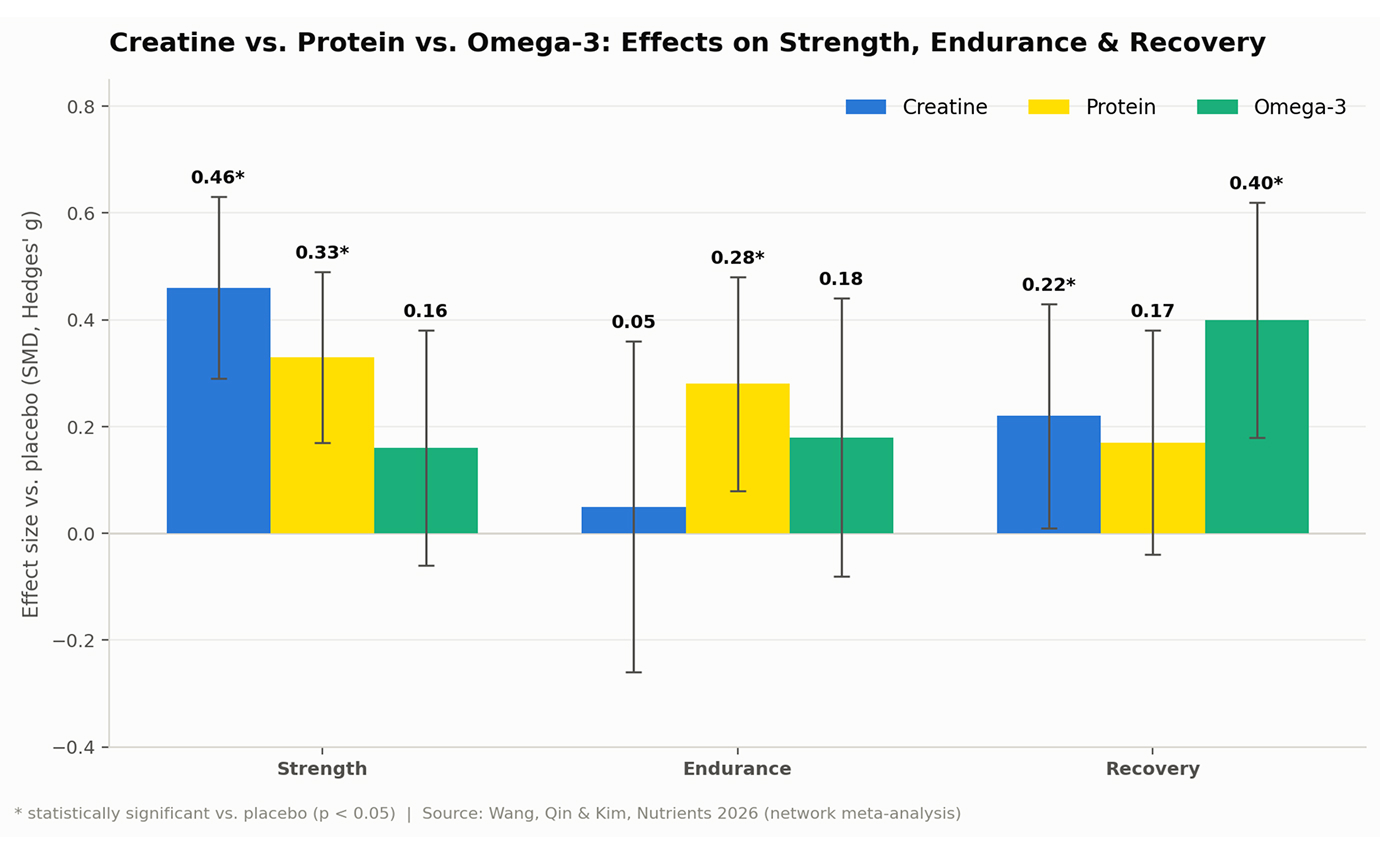
However, his personal regimen shouldn't be viewed as a universal recommendation. The evidence for some elements is more convincing than for others. This year’s network meta-analysis of 35 studies involving 1,211 trained athletes showed that omega-3 ranks first among proteins and creatine in terms of recovery.
Vitamins require an even higher degree of individualization. A recent review recommends correcting actual deficiencies and taking into account diet, training intensity, and the season, rather than taking high doses “just in case”.
The same caution applies to the use of glutamine, joint supplements, and cyclical creatine supplementation.
Buy for a Reason, Not for the Label
An effective supplement regimen should address a specific problem. It shouldn’t just become a collection of products purchased solely because the label promises faster results.
The order of priorities is simple:
Plan your diet around regular, balanced meals.
Make sure you’re getting enough protein every day.
Stick to a consistent workout and recovery routine.
Use sports supplements only when you have a specific goal in mind.
This is exactly where evidence-based nutrition can save you both money and time. Creatine, protein, or omega-3 can be beneficial under the right conditions, while many other products deliver far less than their advertisements promise.
This same principle applies to the Anatoly Fit approach: dietary supplements can complement your workouts, but they cannot replace a structured training plan, recovery, or proper nutrition.
FAQ
Can I take creatine and protein together?
Yes, because they serve different purposes and can be taken on the same day. Protein helps meet your daily needs, while creatine supports high-intensity repetitive exercises and enhances the effectiveness of your workouts.
Is a more expensive supplement automatically better?
Definitely not. Price doesn't say much about effectiveness. Check the ingredients, the dosage, and whether the product has undergone independent testing.
Should I take vitamins all year?
Not necessarily. It’s best to take athlete vitamins only if there’s an actual deficiency in your diet, a lack of nutrients, or an increased need for them.
How many supplements does a beginner really need?
Perhaps none at all. Before buying sports supplements, make sure your diet, protein intake, sleep schedule, and workout routine are already on track.
Subscribe for Updates
By signing up for our newsletter, you agree to the terms outlined in our privacy policy. You can unsubscribe at any time.