Successful summer slimming rarely fails due to a lack of effort. More often than not, the problem arises when the process becomes too aggressive. Calorie intake is drastically reduced, the amount of cardio training doubles, and body weight begins to drop rapidly. At first, this looks like progress. But after a few weeks, strength levels start to decline.
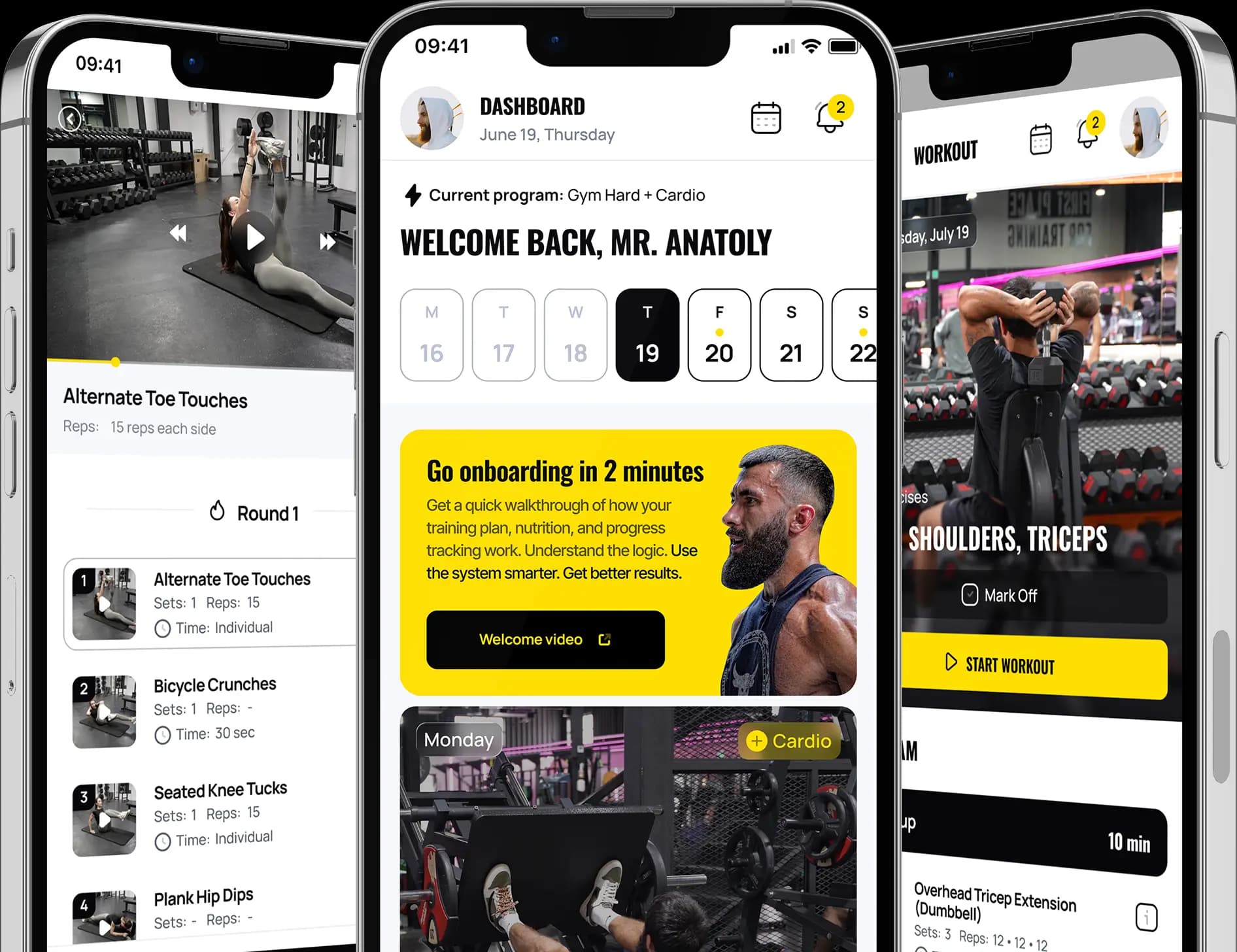
Correct cutting phase should help minimize body fat without undoing months of hard work in the gym. The goal isn’t simply to lose weight. It’s to simultaneously maintain performance, recovery, and muscle mass at the appropriate levels. This balance is one of the core principles of the nutritional approach used in the Anatoly Fit program.
Why Fast Weight Loss Backfires
Calorie deficit is essential for slimming down, but the size of that deficit is crucial. When food intake drops too low, the body starts conserving energy. Workouts become harder, daily physical activity levels often decrease, and metabolic rate may slow down due to reduced activity and impaired recovery.
A cut is too aggressive when:
Workout weights decrease over several consecutive sessions;
Due to hunger, it feels impossible to eat normally;
Sleep becomes more superficial or interrupted;
Body weight drops rapidly, but workout performance declines along with it.
For muscle retention, the goal is slower fat loss with better training quality, not a race against the scale.
Protein Comes First
A high-protein diet is particularly important during the cutting phase, as the body is operating with limited energy reserves. Protein encourages the body to preserve muscle mass even as fat stores are reduced.
Some simple habits can make a big difference:
Include protein in every main meal;
Spread protein consumption throughout the day rather than consuming it mainly in the evening;
Maintain a consistent intake of protein even when reducing calorie intake.
That’s exactly why endless cardio workouts are rarely the right choice. Increased physical activity can boost energy expenditure, but it’s protein intake that helps preserve muscle mass while the calorie deficit does its job.
Tracking What Actually Matters
Not everyone needs strict macro tracking. But when cutting, a certain level of control helps distinguish real progress from mere assumptions. Without numbers, it’s hard to tell whether your plan is working or if daily fluctuations are creating a false impression.
The most useful metrics to track are quite simple:
Protein intake;
Total calorie count;
Changes in body weight over time;
Strength indicators in basic exercises.
A single instance of an extremely high or low weight reading doesn’t mean much on its own. What matters is the overall trend over several weeks. If strength remains stable and body fat gradually decreases — the process is moving in the right direction.
When Cyclical Carbohydrate Intake Is Appropriate
Carbohydrate cycling is often presented as a requirement for getting lean, but most people can make good progress without it. A consistent calorie intake and enough protein usually matter far more.
That said, carb cycling can be useful in some situations. Higher-carbohydrate days may support harder training sessions, while lower-carbohydrate days can fit periods of reduced activity. Some athletes also use this approach to manage appetite and maintain training quality during a long cut.
It may also help support insulin sensitivity, but it should be viewed as a tool, not a shortcut. The basics still come first.
Keep Training Heavy
During a cut, it’s tempting to replace heavy workouts with lighter weights and extra cardio. This usually backfires. Your body needs a compelling reason to maintain its strength, especially when you’re cutting calories.
Keep the strength signal alive:
Include compound exercises in the plan.
Don’t drop the weight too soon.
Reduce the volume of training before lowering the intensity.
Make sure to allow for recovery between heavy-weight workouts.
This doesn’t mean you should aim for the maximum number of repetitions every week. The point is to keep the intensity high enough to maintain muscle retention while reducing body fat.
A Better Summer Shred Strategy
The best results are usually achieved without drastic changes. A moderate calorie deficit, sufficient protein, and regular exercise generally yield better results than strict restrictions that last only a few weeks. The essence is not to lose weight as quickly as possible. It’s to become stronger and leaner as a result of this process, while staying in top shape.
It’s crucial to be patient here. Fat loss usually takes longer than people want. That becomes even more noticeable when strength is part of the goal. Nutrition should help training, not make it harder.
That idea is also part of the APS program. Small adjustments usually work better than drastic restrictions. Progress becomes easier to maintain when strength remains part of the plan.
Subscribe for Updates
By signing up for our newsletter, you agree to the terms outlined in our privacy policy. You can unsubscribe at any time.