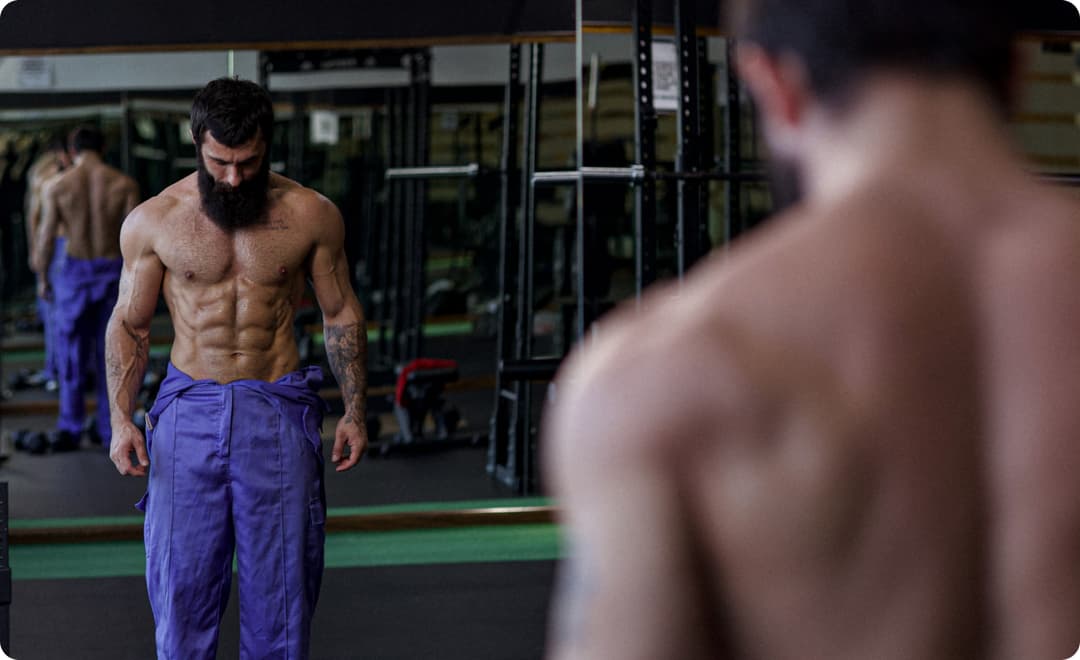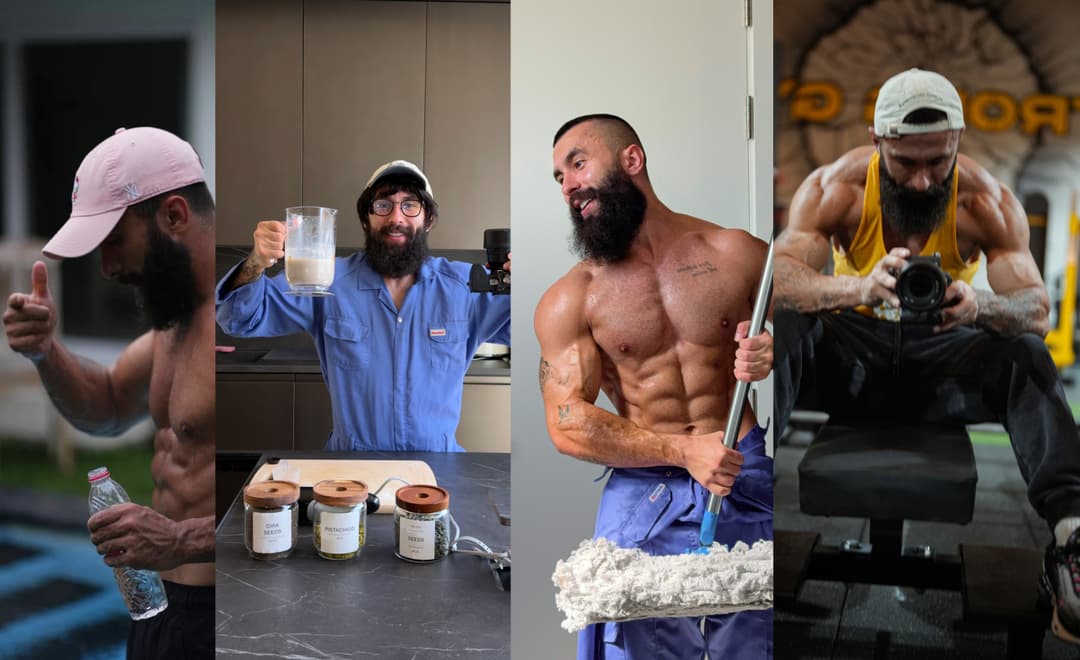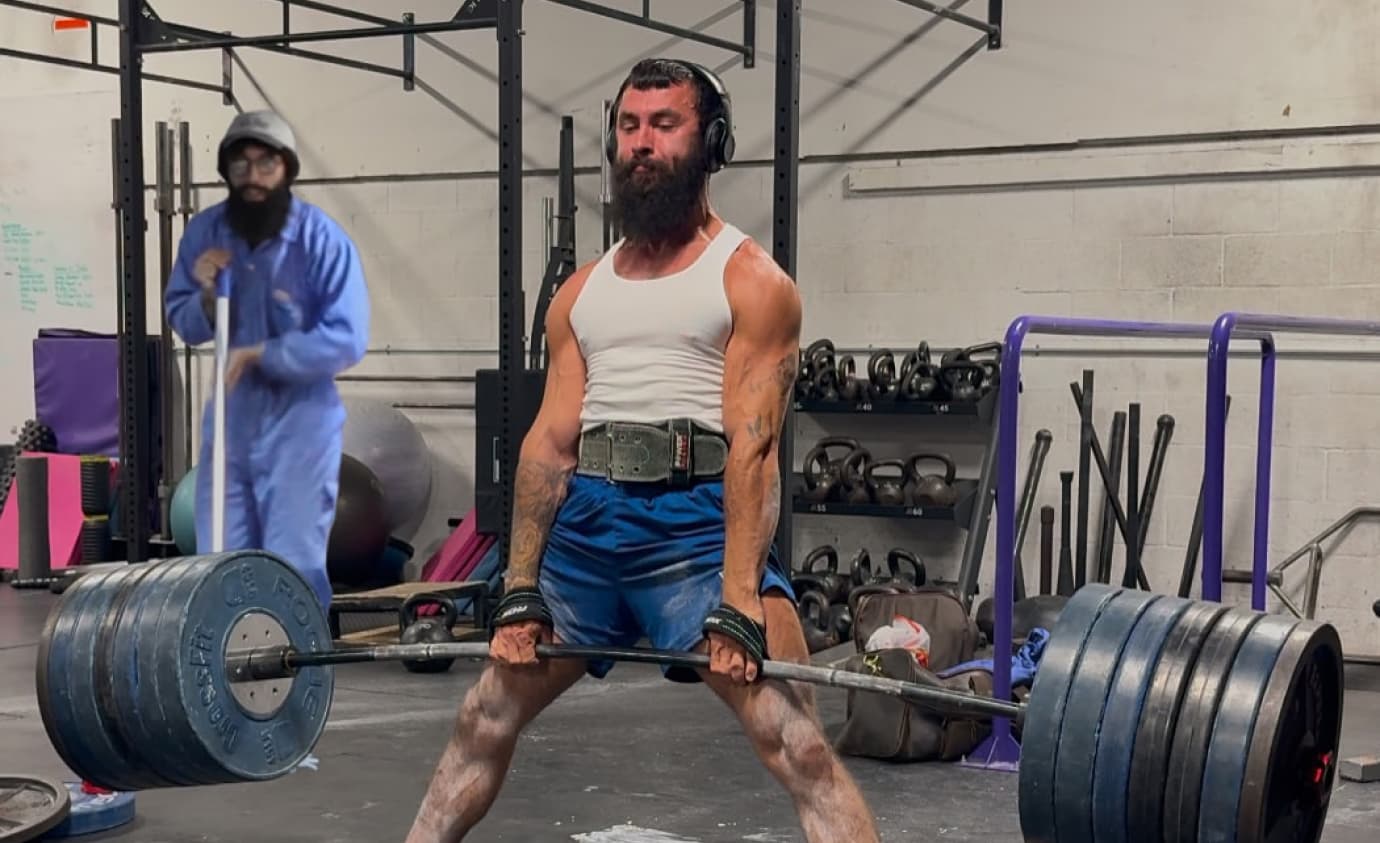
The barbell is set, the clamps are tightened, and for the next half-minute, there’s nothing left to improve physically. However, the lift can still fall apart before it even begins. Vladimir Shmondenko often appears almost unhurried in Anatoly Fit’s videos, even when the weight demands everything he's capable of. This calmness doesn’t mean the pressure has disappeared. It means he hasn’t let the pressure interfere with his preparation for the lift.
A personal record isn’t a test of courage. It’s a routine technical task performed under unusual conditions: with rapid breathing, a narrowed focus, high expectations, and a strong temptation to rush. Effective mental prep doesn’t create additional strength. It helps the athlete tap into the strength they’ve already built up.
Can Your Mind Really Add Strength to a PR Attempt?
The short answer is yes — though not in the way that motivational slogans make it out to be. Sports psychology can’t add new muscle to the barbell. What it can change is how much of an athlete’s existing potential remains accessible when their attention, breathing, and arousal levels are under pressure.
A 2005 study published in the “Journal of Strength and Conditioning Research” involved 12 men and 8 women, each of whom had at least one year of strength training experience. They performed bench press repetitions following a self-selected psychological preparation procedure, a placebo concentration exercise, or a distracting task. Peak strength following the psychological preparation procedure was 8.1% higher than after the placebo exercise. It was also 11.8% higher than after the distracting task.
These figures need to be viewed in context. The researchers measured five repetitions on a modified isokinetic machine, not 1RM with free weights, and the sample size was small. Therefore, it would be misleading to claim that mental prep automatically adds 10% to a personal record. A more reasonable conclusion is that the right mental state can help you tap into the strength you’ve already built-up during training — provided you maintain proper technique, recovery, and warm-up.
When Adrenaline Starts Stealing Technique
The adrenaline rush isn’t necessarily a problem. To lift nearly your maximum weight, you need a high level of arousal. Problems arise when this energy stops supporting the usual routine and starts to alter it. The weight on the bar hasn’t changed, but the athlete’s movement coordination and decision-making have.
Watch out for these warning signs:
Straightening the body begins before the body has properly tensed;
Foot position or grip suddenly differs from the practiced stance;
Deep breath is taken too early, and it’s impossible to hold it comfortably;
Attention shifts from the next action to the consequences of a miss.
A study involving 36 student powerlifters showed that higher scores on the “Sport Competition Anxiety Test” were associated with achieving a lower percentage of the athletes’ previous best competitive total (r = −0.397, p = 0.02). Similar negative correlations were observed in the bench press and deadlift, while the result for the squat was not statistically significant. The study was correlational in nature; therefore, it cannot prove that competition anxiety caused the poorer performance in the exercises. It does, however, demonstrate why psychological pressure should be considered a variable that influences performance rather than simply being dismissed as “nerves”.
The aim isn't to achieve complete calm. On the contrary — stay focused enough to generate power, while remaining aware of the sequence of movements that worked during training. As soon as nervousness alters the grip, breathing, or the first movement, it ceases to be a useful source of energy; it becomes an obstacle.
The Routine Beneath Anatoly’s Calm
In Vladimir Shmondenko's prank videos, there's always a lot of noise: an unfamiliar gym, people talking nearby, cameras, surprised reactions, and the need to stay in character as a janitor. Then the prank pauses, and he approaches the barbell, which leaves no room for careless handling.
The audience can’t know exactly what he’s thinking before each lift. They can only notice that his surroundings don’t seem to affect his preparation at the barbell. This offers a more meaningful definition of mental toughness than shouting, aggression, or feigned fearlessness. It's the ability to stick to a well-rehearsed sequence of movements when the environment is distracting. That's why Anatoly's composure isn't just part of his performance: it illustrates a reliable lifting principle. When the situation in the gym becomes unpredictable, the preparation process must become even more routine.
This discipline has yielded results that go beyond just highlight reels. In 2019, Vladimir Shmondenko lifted 245 kg in the deadlift while weighing 78.65 kg and won his weight class at the Kyiv Championship. Of course, concentration alone didn’t give him that kind of strength, but it helped show it at the moment when the lift mattered most.
Which Visualization Techniques Work Before a PR?
The most useful visualization exercises before performing a lift focus on rehearsing the attempt itself, rather than on the celebration that follows. Instead of observing the perfect lift from the sidelines, the athlete should experience it from a “first-person” perspective, at roughly the actual speed. Effective visualization techniques transform the movement into a brief sensory scenario:
Assume your usual stance and position your hands.
Feel the barbell on your palms, shoulders, or back.
Maintain your breathing rhythm and muscle tension.
Work through the expected “stopping point” without skipping it.
Complete the repetition and lower the barbell safely.
This is not a substitute for strength training. In a 2010 experiment on motor imagery, 9 participants visualized muscle contractions during rest periods, while 10 performed a neutral task. Both groups performed the same training program. There were two types of press. After 12 training sessions, the group that used visualization showed a greater increase in maximum strength in the leg press, but the researchers didn't find a similar advantage in the bench press.
These mixed results are significant. Mental rehearsal can complement physical training, but its effectiveness may depend on the movement and the quality of the mental imagery. It's preparation for performance — not a way to avoid the work required to achieve results.
One Cue Is Enough Once You Touch the Bar
As soon as hands reach the bar, the instructions should be kept brief. Focus and concentration doesn't mean you have to recall the entire technique manual while performing the exercise. It's usually more helpful to give just one familiar cue:
Squat - “Drive the floor away” - Separate assessment of the condition of the knees, hips, and chest
Bench press - “Send the bar up” - Paying attention to every muscle that's working
Deadlift - “Push the floor, then stand tall” - While trying to lift the barbell off the floor
These are merely examples, not universal guidelines. A signal should be used during competitions only after it has proven its effectiveness in regular training sessions. The flow state isn't some mysterious “mental void”; it's the moment when your focus narrows to such an extent that a well-rehearsed movement is performed effortlessly. Record day — not the best time to try out new phrases or new techniques.
What Does a 90-Second PR Routine Look Like?
Ninety seconds is more than enough to narrow down the problem — if the sequence is already known:
90–60 seconds: Check the discs, cuffs, safety handles, or safety catch. Resolve any practical concerns before approaching the barbell.
60–30 seconds: Mentally rehearse one full repetition, including the “pause”.
30–10 seconds: Focus on one technical cue and stop listening to last-minute advice.
Last 10 seconds: Approach the barbell and follow the same preparation technique as you would during heavy training sets.
This routine shouldn't be performed for the first time on the day of filming. It needs to be practiced until every step becomes second nature. The calmness evident in Anatoly's difficult climbs confirms the same thing: the camera can change the atmosphere, but it shouldn't change the sequence of actions itself. Confidence comes from repeating familiar actions, not from a sudden absence of fear when weight matters.
Walking Away Can Be the Stronger Decision
Some record attempts should end before the bar moves. If the final warm-up sends it away from the usual path, leaves your stance unstable or makes the starting position feel unfamiliar, extra weight will not fix the problem. Sudden pain or even a brief spell of dizziness ends the discussion. So does a safety setup you do not trust. And if somebody else talked you into a larger jump, the attempt is no longer following your plan.
None of these decisions is a test of character. Attempting to lift a weight despite the circumstances will no longer be an indicator of physical fitness; it will become an indicator of an athlete’s willingness to ignore a new risk. Mental toughness also means not letting disappointment influence your decisions. Personal records can be broken again. The aim of such a choice isn't to be cautious for the sake of caution, but to preserve the training necessary to achieve that goal.
Calm Is Part of the Lift
The final seconds before the bar should contain fewer decisions, not more. Regulate arousal, rehearse the rep, keep one proven cue and stop if safety or technique changes.
Vladimir Shmondenko’s composure, as reflected in Anatoly Fit’s character, gives this principle a tangible form. A champion’s mindset cannot be artificially created. It’s a repeatable way to keep strength, judgement and technique working together under pressure.
FAQ
When to start practicing a pre-PR routine?
Long before the day of record. For several weeks, repeat the same short sequence of exercises before heavy but manageable sets. If done only when reaching a new personal best, the warm-up itself can become yet another source of stress.
Does feeling nervous mean I'm not ready?
No. A rapid heartbeat and heightened alertness are normal before a challenging test. The best indicator is whether you can continue to stick to your planned routine, chosen intensity, and time frame. If your nerves start to affect these decisions, take a break and restart the process.
Does visualization show a flawless and effortless barbell lift?
Not necessarily. Mentally walk through the part of the lift where the barbell usually slows down, and then imagine a controlled finish to the movement and a safe return of the barbell. Visualization that skips the difficult part may seem encouraging, but it leaves the most important moment unrehearsed.
What should I do right after a failed PR try?
Don’t let disappointment influence your choice of the next weight. First, identify the most likely cause: an unrealistic load, poor form, loss of tension, or poor timing. Repeat the attempt only when the problem is obvious, can be corrected immediately, and fatigue doesn’t compromise safety.
Subscribe for Updates
By signing up for our newsletter, you agree to the terms outlined in our privacy policy. You can unsubscribe at any time.