On paper, a program might seem intense: heavy sets, tough workouts, constant effort. But without a clear structure, progress becomes inconsistent. One week feels intense, the next — sluggish, and it’s hard to understand why. The problem isn’t the effort. It’s the lack of a clear system that defines how load, volume, and recovery should change over time.
It’s precisely this gap that the structured approach offered by the APS app is designed to fill.
What “Programming” Actually Means
A training program isn’t a fixed list of exercises. It’s a series of decisions that change over time. The goal is to guide the body through stress and adaptation gradually, rather than repeating the same workout every week.
One of the key concepts here is progressive overload. The workload doesn't increase randomly. It builds up when your body is ready for it. This can mean:
Heavier weights,
More repetitions,
Better control under the same conditions.
At the same time, training volume and intensity must remain balanced. Too much volume at low intensity leads to stagnation. Too high intensity at low volume causes fatigue without progress.
This is how it looks in practice:
Increase the load if your performance remains consistent;
Keep the weight the same if your form starts to deteriorate;
Reduce the intensity if your recovery is lagging.
If a workout starts to feel harder than expected, or the quality of your movements deteriorates, pushing yourself further usually has the opposite effect. In that case, it’s better to either maintain the same intensity level in your next workout or slightly reduce the load before increasing it again.
Why Random Workouts Don’t Work
Irregular exercises disrupt the training cycle. One session turns out to be too difficult, the next one is skipped, and then a completely different exercise is introduced. The body never receives enough repetitive signals to adapt.
This is where supercompensation comes into play: a training session should be followed by recovery, and then by a slightly more moderate one. If every session is different, the body merely reacts to it rather than adapting.
A structured program affects not only how you feel but also the visible results. When training is planned in advance, weight loss becomes more predictable, and strength levels remain stable. This is especially important when the goal isn't just to improve performance but also to achieve visible changes. Instead of weakening during the cutting phase, the body retains its ability to handle the workload.
Periodization Without Overcomplication
This refers to controlled, planned changes. In linear periodization, the workload generally increases in one direction: starting with lighter loads and progressing to heavier ones. This approach works well for beginners, as the logic behind it can be easily understood.
Undulating periodization provides for more frequent variations in training intensity. For example, one session may be devoted to strength, while another focuses on higher reps or speed.
Both methods serve the same purpose: they prevent the body from receiving the same signal every week.
RPE — The Missing Control Tool
RPE helps you adjust the intensity of your workout without relying on fixed numbers. This metric serves as a guide during a set, not after it. This is important when your strength levels fluctuate from one session to the next. The logic is simple:
RPE 6 — a few more reps are possible;
RPE 8 — difficult, but still under control;
RPE 10 — no strength left for another rep.
It's essential because in real life, your strength is constantly changing: sleep, stress, diet, and so on. The RPE scale lets you tailor training to your current condition, rather than forcing yourself to meet specific numbers.
Why You Need a Deload
A deload week refers to a scheduled reduction in workload. And it doesn’t mean at all that your progress has stopped. Fatigue can build up gradually:
Sleep quality declines,
Even warm-ups start to feel difficult,
Form begins to deteriorate.
Slowing down for a short time will help you release this built-up stress. And the next session will feel easier, while intense workouts will become effective again.
Simple System That Actually Works
A program becomes useful when it can be checked, not just guessed. A few simple rules of thumb can help with this.
Start with the basics:
Keep a training log after each session;
Don’t change your exercises every week;
Track your sleep, muscle soreness, and energy levels;
Plan lighter weeks before fatigue forces you to do so.
This gives the program a reference point. So, you can compare your workouts and see when effectiveness declines. Then you can adjust to the next workout before fatigue becomes a hindrance.
Make Training Trackable
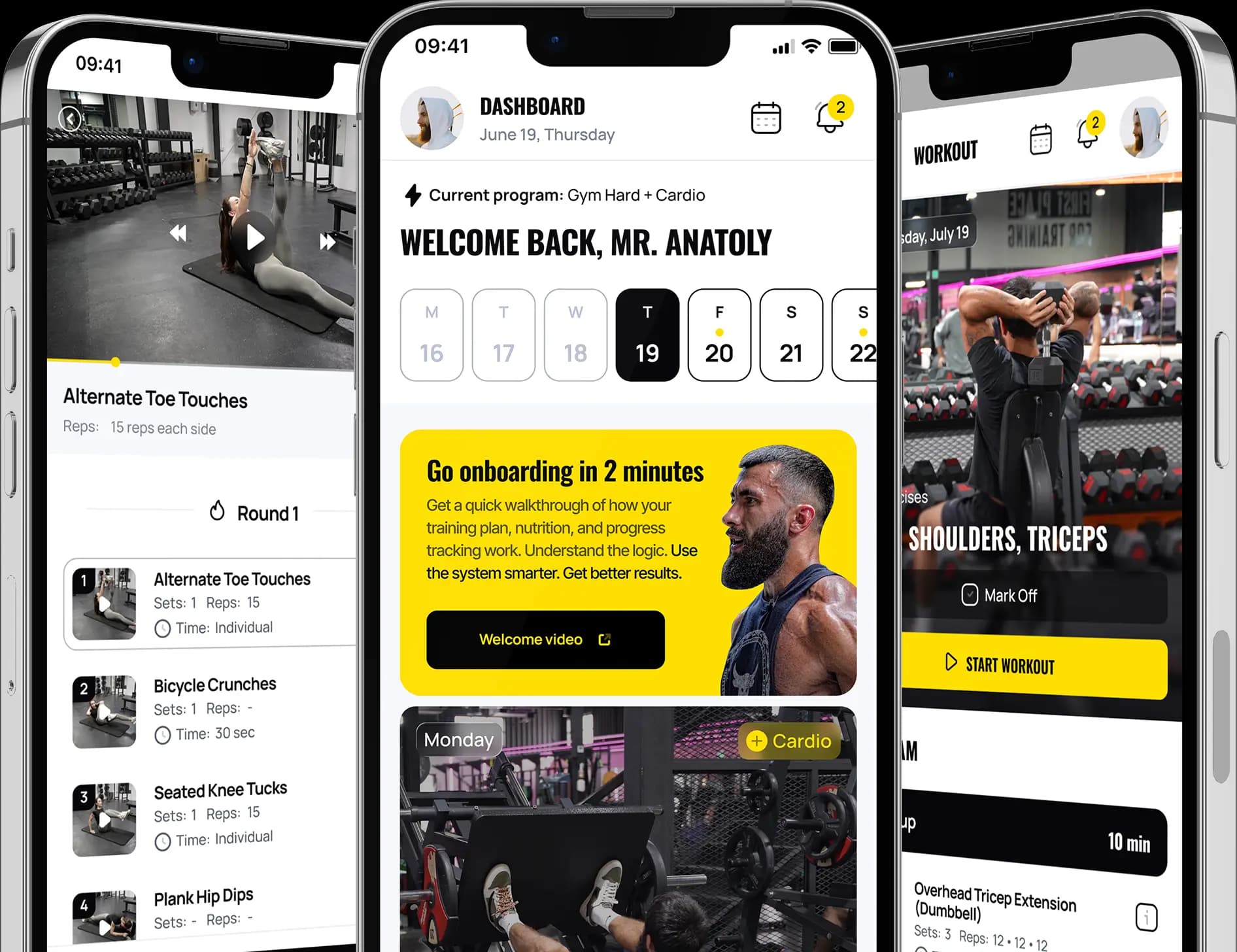
Workouts stop feeling chaotic when every session leaves a mark. This logic is already built into the APS app. Users can follow a specific structure based on their personal data. It also records key workout metrics and adjusts all subsequent steps based on current results. And you don't have to figure it out anymore — just follow an expertly made plan.
Over time, this approach not only promotes steady progress but also helps create a leaner, more defined physique without losing muscle strength.
Subscribe for Updates
By signing up for our newsletter, you agree to the terms outlined in our privacy policy. You can unsubscribe at any time.