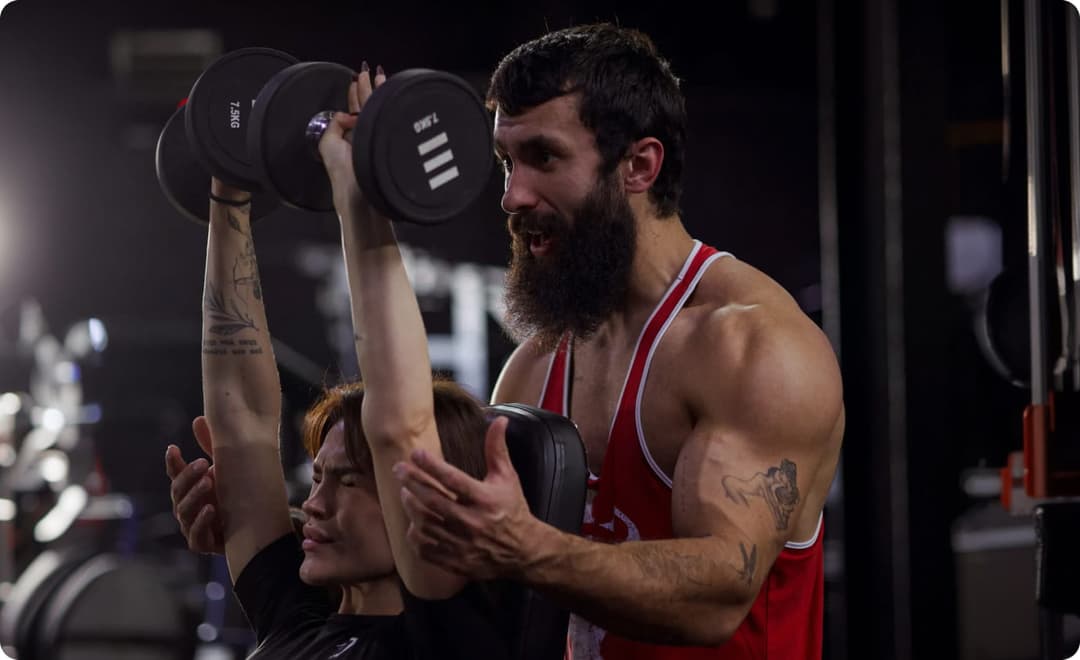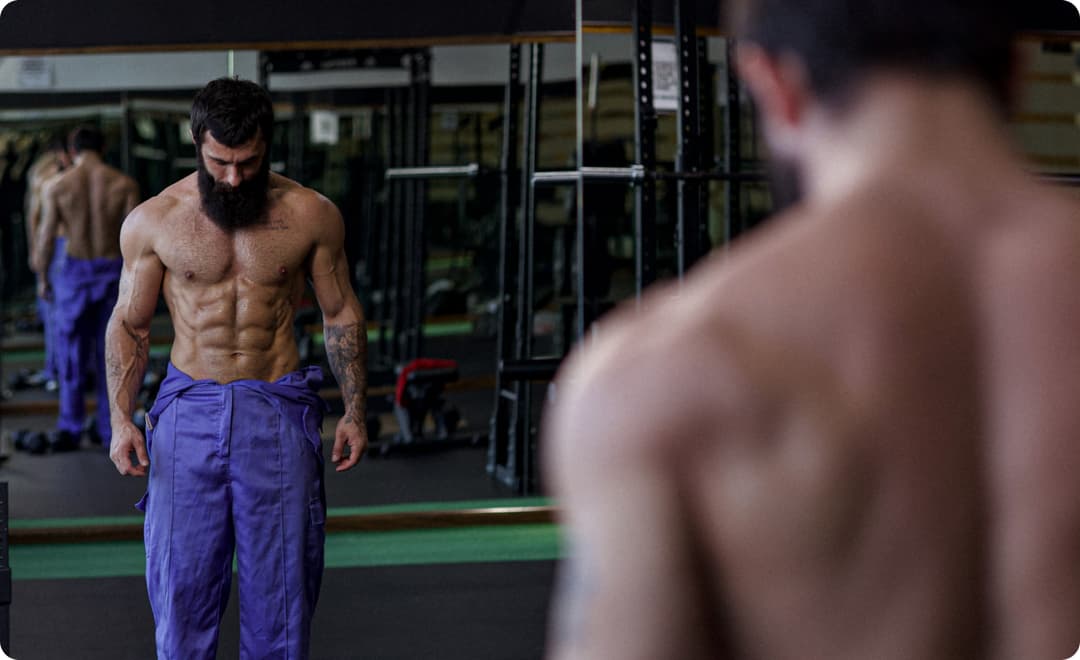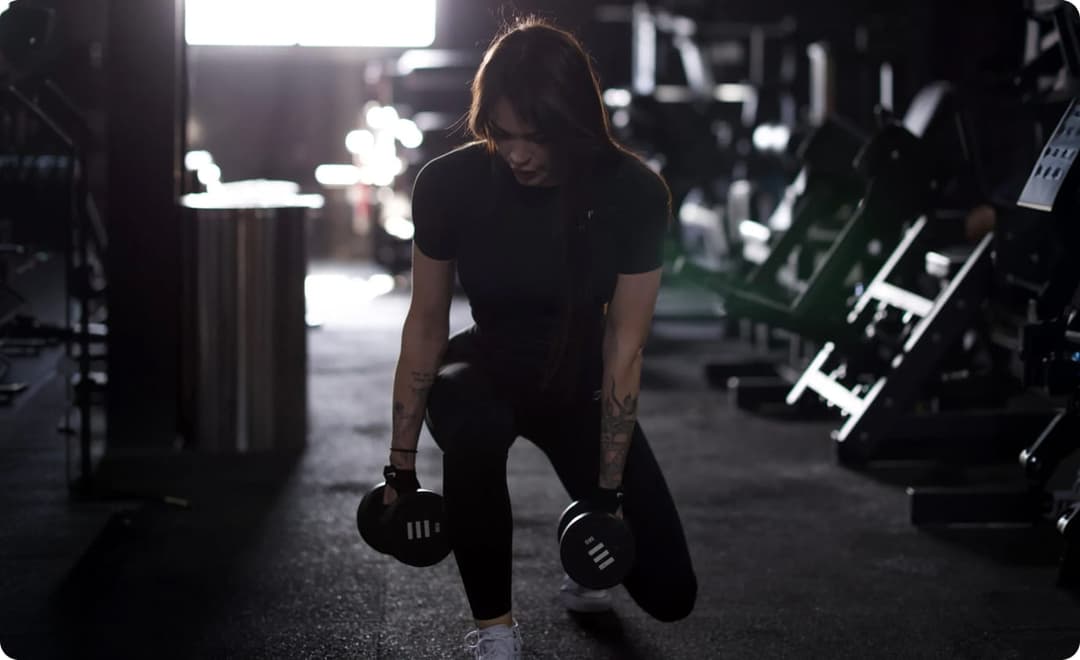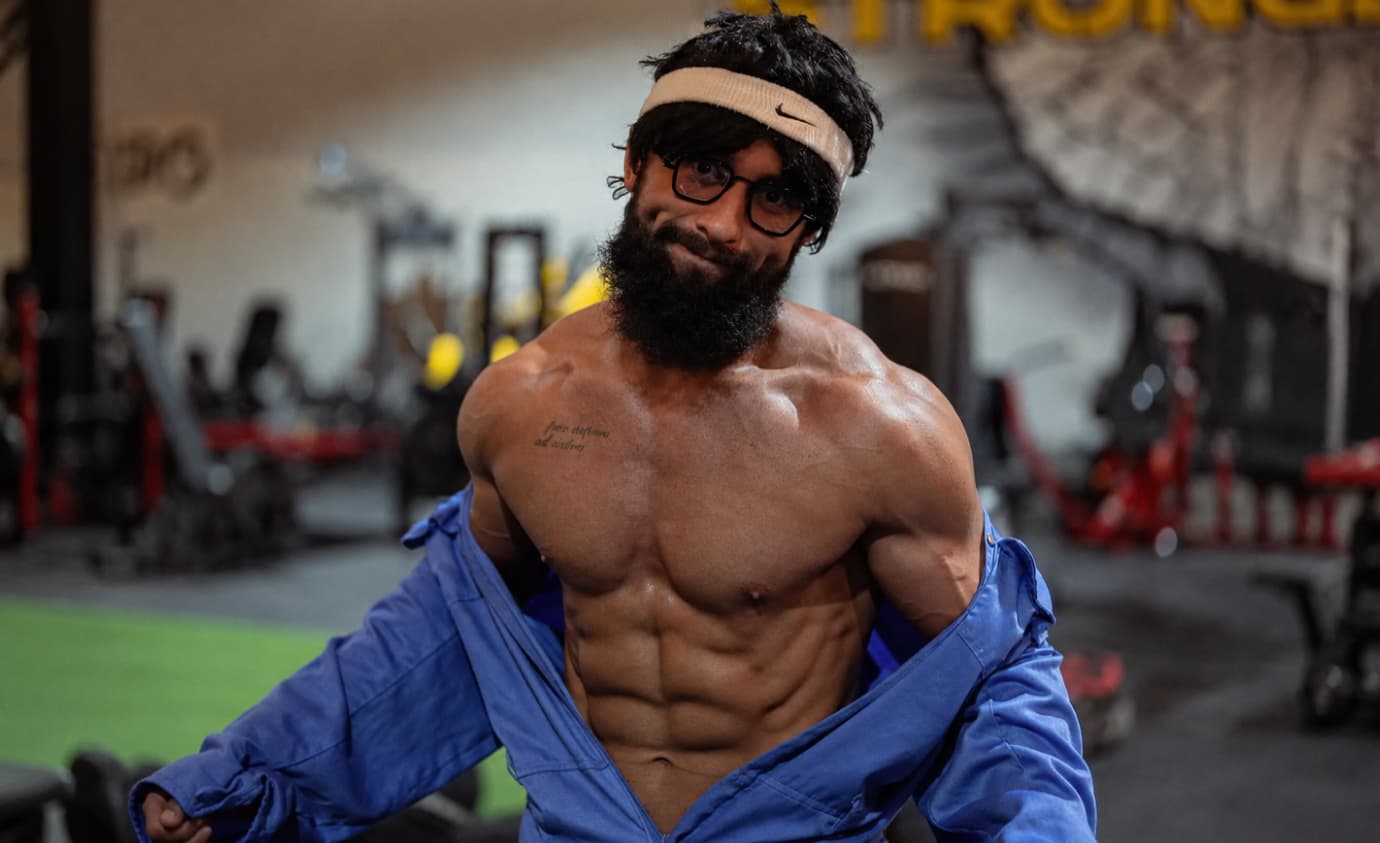
All Anatoly needs is a mop and a weighted barbell to make everyone around him stop and stare. This stunt lasts just a few seconds, but Vladimir Shmondenko developed the strength needed for it long before the cameras rolled.
And his Anatoly Fit system follows the same training logic: intense workouts need to be planned, the load needs to be increased gradually, and adjustments need to be made if circumstances change.
Why Did the Janitor Character Work When Regular Fitness Content Didn’t?
Vladimir had been filming his workouts for several years before Anatoly appeared on the scene. But yet another strong athlete lifting weights didn’t give viewers a reason to stick around on his channel. He worked as a waiter for almost a year to buy his first Canon camera for filming videos. Then he quit his job, with about 4,000–5,000 subscribers and no steady income from his content. His breakthrough came when he stopped making strength the main focus of his videos and started using it as a plot twist.
In a matter of seconds, the janitor sets certain expectations: his work clothes, a mop, a calm demeanor, and no obvious reason to approach a heavily loaded barbell. Then he confidently lifts it. This joke requires almost no translation, which has allowed this format to win over an audience from all over the world that far exceeds the audience of Vladimir's previous videos.
He also portrayed Anatoly as more of a good-natured person rather than a confrontational one. This character doesn’t win by humiliating another weightlifter; he allows the barbell to challenge what people took for granted as the truth. That’s exactly why this character fits so naturally into this story: he transformed years of specialized training into something viewers could grasp in a matter of seconds.
What Had Vladimir Built Before He Ever Picked Up the Mop?
His character took shape after he became an athlete. For years, Vladimir studied what exactly makes lifting heavy weights a repeatable feat rather than a one-time achievement. Ever since he was a teenager, he had been comparing workout programs he found online, trying out different approaches, and observing how his body responded. His first experience working with a trainer lasted only two sessions; for the most part, he trained on his own.
By the time Anatoly arrived, three things were already ready:
Regularly performing squats, bench presses, and deadlifts;
Experience in adjusting workouts when a previous approach stops yielding results;
Competition lifts performed according to the rules, not just for the camera.
Vladimir began competing in powerlifting at around age 18 — long before the videos of the janitor became available to a global audience. The suit changed the way people perceived his strength. It wasn’t the reason behind the technique, control, or training experience that made this prank possible.
Does Anatoly Really Lift More Than Professional Heavyweights?
This isn't the general rule. Vladimir himself points out that many elite powerlifters lift more. What makes his results extraordinary is the body weight at which he achieves them. He deadlifts 320 kg, squats 225 kg, and bench press 150 kg, all while weighing 78 kg.
These are the personal records Vladimir has reported, not his most recent officially recorded results. His heaviest publicly recorded deadlift in competition is 245 kg, achieved in Kyiv in 2019. This distinction avoids exaggeration without detracting from the story. Anatoly doesn’t need to be stronger than every professional; the surprise lies in just how much strength is hidden within a man whom the audience in the gym has already underestimated.
The Training Logic Behind the Heavy Lifts
The barbell shown in this video is the end result, not a picture of a typical week of training for Vladimir. He keeps squats, bench presses, and deadlifts at the core of his training, but the demands of these exercises vary. Performing the heaviest versions of each exercise at every workout would leave little room for developing the skills needed to execute them.
Throughout a training cycle, the workload can vary in several ways:
During more intense periods, athletes use more working sets, fewer repetitions, and a gradual increase in load;
In less intense periods, incorporate a wider variety of exercises and reduce the weight on the barbell;
Workouts for grip strength, wrists, abs, and core muscles can be performed after the main part of the workout or set aside for a separate session.
The structure is more important than trying to make every workout harder. One phase gives Vladimir the opportunity to train with heavy loads; the other broadens the range of exercises and focuses more on the supporting muscles. The video shows only the few seconds worth showing. His workouts cover everything that needs to happen leading up to that point.
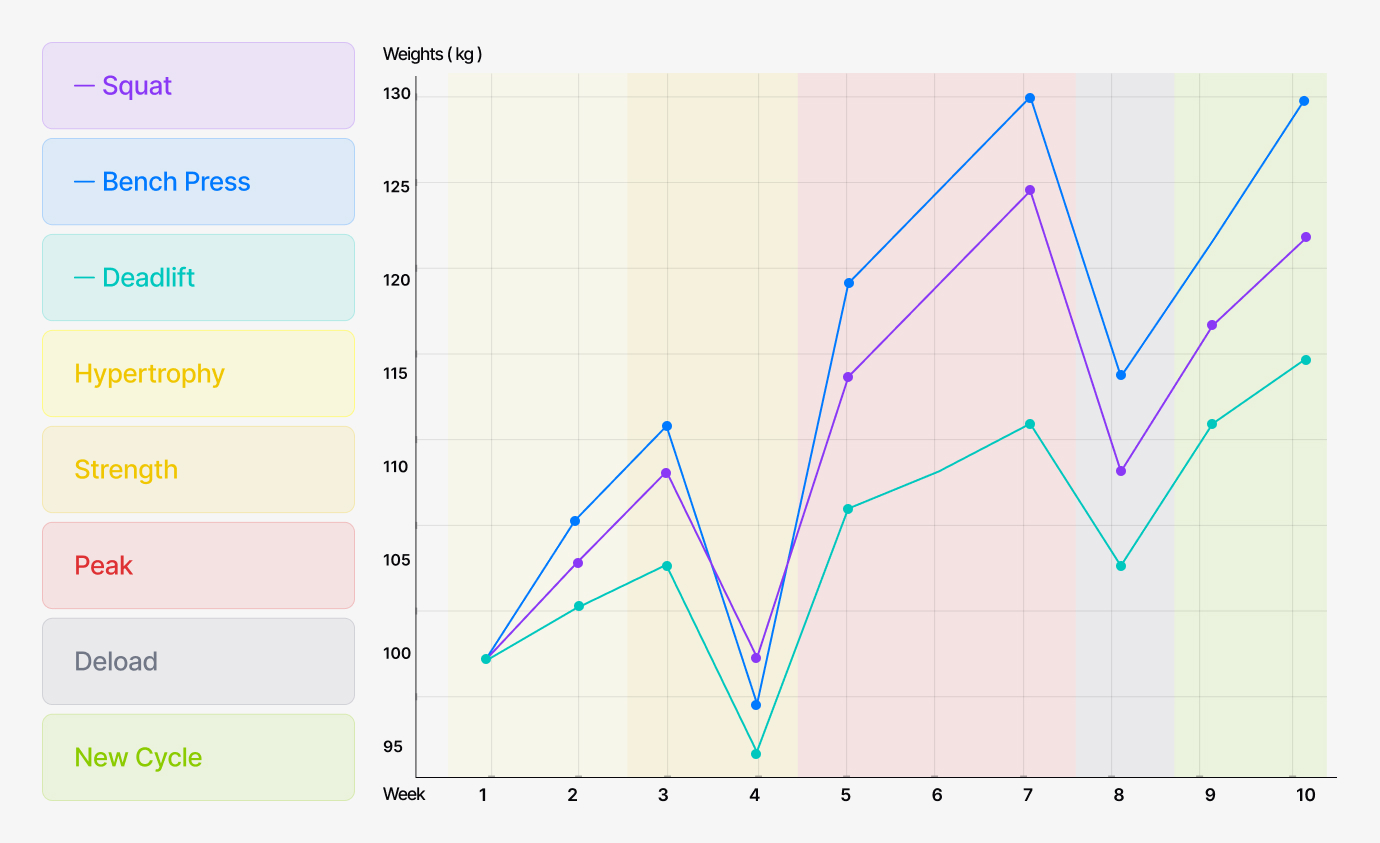
Across a longer cycle, these shifts can lead from hypertrophy work into strength and peak phases, followed by a deload before the next build begins.
How Anatoly Decides When to Add Weight
You don’t add a new weight plate to the bar just because a new week has started. As part of the basic program, Vladimir can add only 1.5 or 2.5 kg. In a more advanced strength training block, the workload changes first: the number of sets and exercises increases, while the number of repetitions gradually decreases. He adds more weight later, once previous workouts have prepared him for it.
For other athletes, this rule is practical:
Add weight as long as your form remains stable;
Maintain it when your form becomes unstable;
Reduce the load when fatigue begins to affect your movement.
Recovery may also take priority over schedule. Vladimir usually works out three or four times a week, but during busy filming periods, that number may temporarily decrease — sometimes to just one workout at the gym. His approach is to do whatever his body allows on a given day, rest when recovery is truly necessary, and work hard when he’s ready.
How Can You Turn Anatoly's Principles Into Personal Training Program?
Vladimir’s training regimen cannot be copied line for line. His experience, recovery, and work capacity differ from those who have been training for only a few months. It’s worth asking which elements of his approach remain practical when the numbers change.
Worth carrying over - Better left individual:
A clear goal for strength and comparable workout data - Vladimir’s personal bests as targets
A slight increase in workload following controlled trials - His total workload and peak sessions
Alternating between more and less intense phases - A fixed copy of his weekly split
Adjusting the plan in the event of changes during the recovery process - Work capacity built over years of training
This difference turns inspiration into practical training. A plan tailored to your current fitness level is more in line with Vladimir’s approach than one that simply copies his weights.
Strength That Outlasts the Joke
The mop allowed Vladimir to demonstrate his strength while keeping it hidden. The most difficult part took place off-camera: designing the lifts, adjusting the load, and sticking to the plan even as circumstances changed.
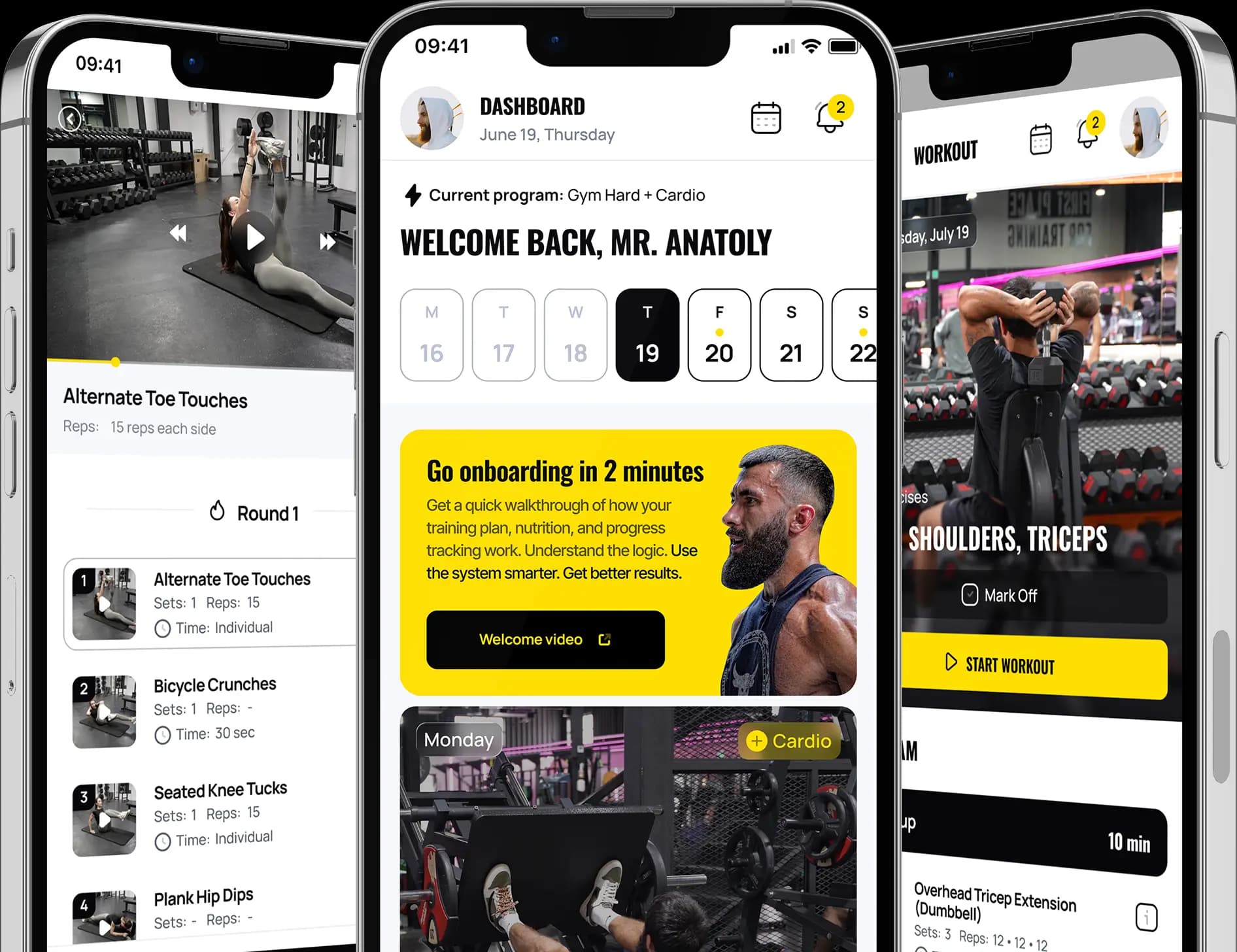
The Anatoly Fit program builds on this idea by designing workouts based on each user’s starting level, rather than using Vladimir’s benchmark of 320 kg as a guide.
FAQ
Was Vladimir a Powerlifter Before He Created Anatoly?
Yes. He started competing when he was about 18, a few years before the janitor character became famous around the world.
Does Vladimir stick to the same weekly schedule all year round?
No. It's usually three or four workouts, but the schedule depends on his training cycle, recovery period, and the workload associated with filming.
Can a Beginner Use the Same Training Approach?
These principles can be adapted, but the workload and intensity of the workouts must correspond to the individual's fitness level.
Can Anatoly’s training principles work without powerlifting goals?
Yes. You can train this way without aiming to break powerlifting records. The Anatoly Fit system tailors the workout intensity to the user’s fitness level, so Vladimir’s results aren’t a reference point.
Subscribe for Updates
By signing up for our newsletter, you agree to the terms outlined in our privacy policy. You can unsubscribe at any time.