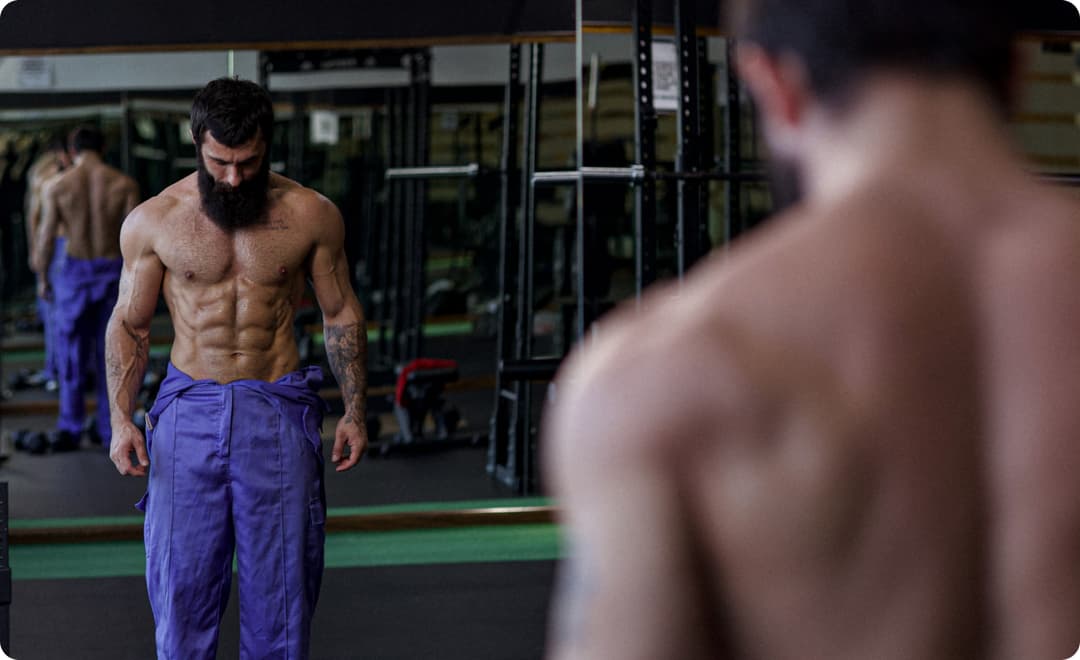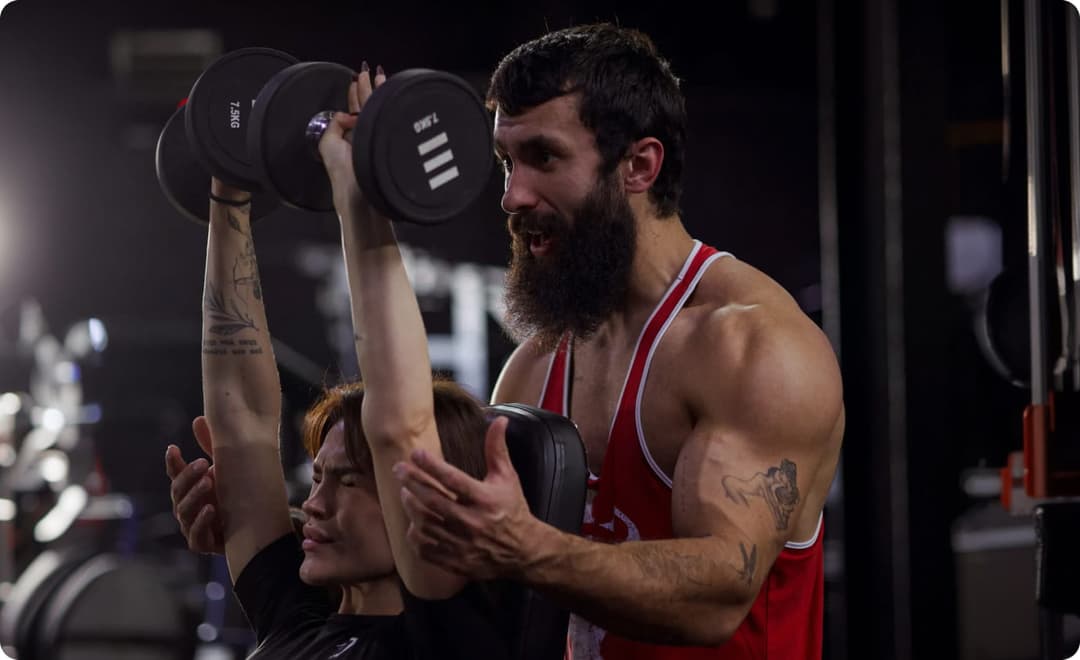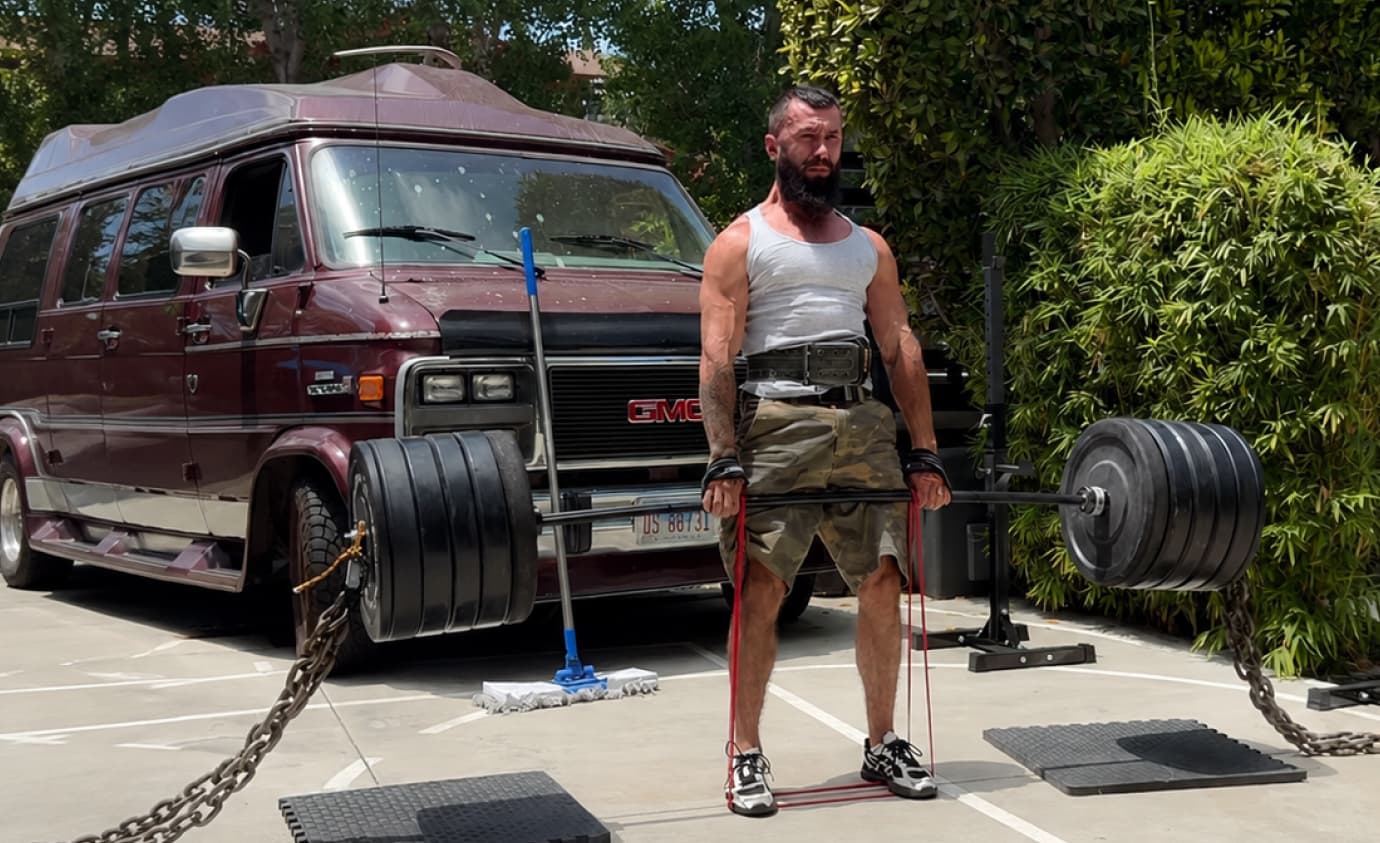
A 100-kg barbell remains the same weight — 100 kg — from chest level to full arm extension. Add chains or secured resistance bands, and the resistance will increase along with the barbell’s weight. In Anatoly Fit’s video, the heavy finish to the exercise may look easy, but simply extending your arms fully doesn’t explain how that strength was developed.
Accommodating resistance increases the load in situations where using leverage would reduce it. Without a specific goal, it simply makes a simple lift more difficult.
What Does Accommodating Resistance Actually Change?
Free weights don’t become lighter or heavier as the barbell moves. Instead, the angles of joint flexion and the lever arms change, causing the same load to be perceived differently at various points along the strength curve.
Chains or resistance bands alter the nature of this load:
Additional resistance is lowest near the bottom;
It increases as the links rise or the straps stretch;
In the upper section, effort is required — rather than simply coasting to the end.
The aim isn't to have the same level of difficulty at every centimeter. No configuration can fully replicate the proportions or “critical point” of every athlete; it merely shifts the part of the rep that requires the most effort.
Chains and Bands Don’t Load the Bar in the Same Way
Both tools increase resistance at the top of the movement, but they feel different. Chains add suspended weight link by link. Elastic bands create a spring-like tension and continue to pull as the bar is lowered.
Method - At the bottom - Near lockout - Key variable:
Bench press chains - Some links remain grounded - More chain is suspended - Chain length
Resistance bands - Less stretch - Greater tension - Anchor height
If each link in the chain doesn't touch the floor, it's simply extra weight, not a variable load. The color of the strap is also not an indicator of tension; it's the attachment point, the amount of stretch, and the condition of the material that determine the tension.
Why Does the Westside Method Pair It with Speed Work?
The Westside Barbell method involves varying the load during speed training so that, after the “stuck” zone, the upper part of the range of motion remains under tension. The weight remains submaximal, but each rep is performed with the goal of accelerating.
The official upper-body wave for the Westside method looks like this:
Week 1: 9 × 3 at 70% of 1RM;
Week 2: 9 × 3 at 75%;
Week 3: 9 × 3 at 80%.
Bands or chains account for 25 percentage points each week; the rest comes from discs. This is a Westside template, not a one-size-fits-all starting plan.
Speed strength is the ability to move a submaximal load with the maximum planned acceleration while maintaining a stable barbell trajectory. Explosive strength is the ability to rapidly generate force at the start of a repetition. These are interrelated physical qualities, not two separate Westside techniques. Both are developed through dynamic resistance training, with elastic bands and chains altering the nature of the resistance distribution.
Can Chains and Bands Really Improve Lockout Strength?
They can help increase strength during the holding phase, but only if the missed repetition is truly a problem at the limit of one’s capacity. It’s worth considering in the following cases:
The barbell lifts evenly off the chest;
Speed decreases late, almost at the moment of full elbow extension;
The trajectory of the barbell remains steady until it comes to a stop.
This pattern indicates that the athlete can initiate the press but cannot maintain the effort due to a change in leverage. Increasing resistance in the top phase does not solve the real problem if:
The barbell never lifts off the chest,
Position of the upper back is compromised,
Motion trajectory varies from rep to rep.
First and foremost, attention should be paid to technique or strength in the lower phase.
What Does Newer Research Actually Support?
The available data are less convincing than the marketing claims. Several years ago, an experiment was conducted in which 13 basketball players performed sets of three weighted squats at 85% of their 1RM. In four experimental conditions, resistance bands provided 0%, 20%, 30%, or 40% of the total resistance. A greater contribution from the resistance bands was associated with higher mean concentric power and a faster rate of force development.
This result reflects an immediate response during a single training session. It doesn't mean that bands provide better weight stabilization during the bench press after several weeks of training. A 2022 systematic review reached a more cautious conclusion: training with variable resistance and traditional resistance generally yields comparable results in terms of increasing maximum strength and muscle power.
Therefore, resistance bands and bench press chains are options for training programs, not proven methods for improving performance for every athlete.
How Does This Fit Anatoly’s Verified Training Logic?
That's not what you'll see in his daily workouts — it's only used as a targeted tool. Vladimir Shmondenko doesn't actually build his program around circuit training or Westside methods. His approach remains simple: squats, bench presses, and deadlifts as the main exercises, supplemented by auxiliary drills to address weaknesses and ensure steady, controlled progress over time.
One of the APS home workout plans includes squats (4 × 14) and hip thrusts (4 × 18) with a fitness band. In practice, this simply means adding resistance to make the movement more challenging, especially at the top of the range of motion. It’s a simple way to increase the intensity of training at home, and there’s no need to overcomplicate it or compare it to any specific powerlifting systems.
How Should You Test Chains or Bands Without Guessing?
Start by performing the exercises with heavy weights using proper form, rather than focusing on new equipment. A side-view video can show whether the barbell slows down near your chest, halfway through the movement, or closer to the bottom position. Then:
For your first set, choose either chains or bands.
Before adding variable resistance, remove some weight from the plate.
Measure the added load at both ends of the movement; Westside recommends using appropriate weights.
Ensure the attachment length and tension are equal on both sides.
Stop the set if the bar’s usual path or starting position changes.
Compare this lift to your initial attempt. A heavier lift, in and of itself, proves nothing; it merely demonstrates a more technically sound execution of the movement in the identified weak area. Leave exercises with a full range of motion using standard plates in the program.
A Training Tool Should Solve a Visible Problem
Chains and straps are only worthwhile when the change in load helps to improve a specific phase of the lift. Additional complexity alone isn’t progress.
Within the Anatoly approach, the primary movement remains the benchmark: if the technique or results don’t improve, the auxiliary element hasn’t served its purpose.
FAQ
Do chains need to touch the floor during a bench press?
Yes. Some of the links should remain on the floor at the bottom and rise as the bar is lifted; otherwise, the resistance remains virtually unchanged.
Do I need a bar-speed tracker for the first test?
A phone placed side-on is enough. Compare where the line starts to slow down, whether its path remains the same as usual, and whether both ends rise at the same time.
When has the setup become too aggressive?
This happens when the bar stops moving along its usual path.
Subscribe for Updates
By signing up for our newsletter, you agree to the terms outlined in our privacy policy. You can unsubscribe at any time.