Two athletes can lift the same weight but achieve completely different results. One moves the barbell with purpose. The other struggles through each repetition as if the set has already failed. The same load, different speed, different training effect.
This difference matters. Strength isn’t just about how much weight is on the bar, but also how quickly the body can generate force. In the APS system, this idea fits into a broader concept. That is, heavy work has its place, but speed work teaches the body to move with power, not just to endure the lift.
What Is the Dynamic Effort Method?
Speed-focused training is often misunderstood because the weight on the barbell doesn’t look impressive. The goal isn’t to test your maximum strength, but to learn how to generate power quickly while maintaining proper form.
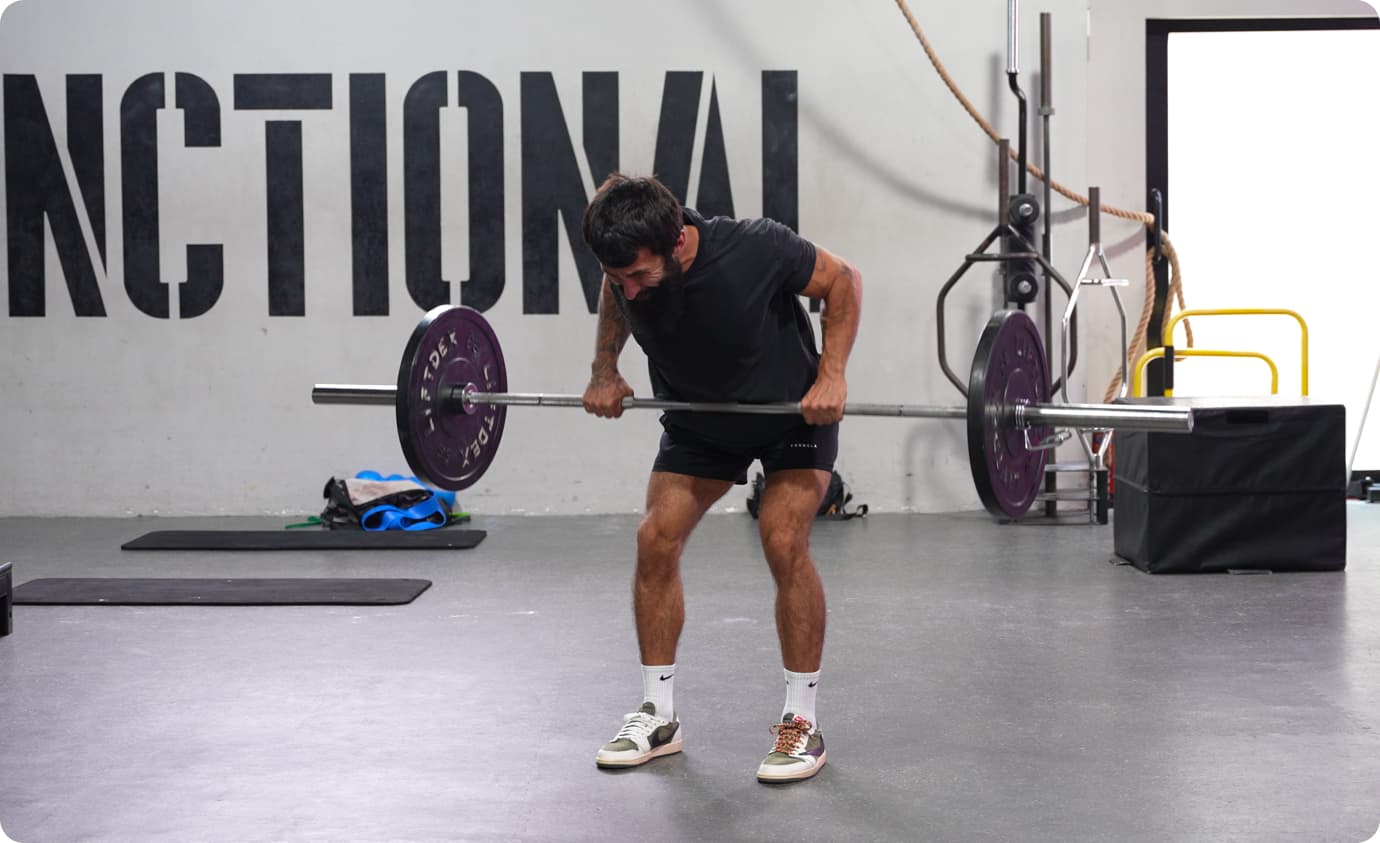
During a typical speed-oriented workout, the weight is usually lighter than what is used for heavy sets. Complexity lies in the intent: each repetition must be performed as quickly as possible from start to finish.
A few key principles remain the same:
Moderate loads instead of maximum weights;
Short, explosive sets;
A consistent bar speed throughout the entire workout;
Perfect technique for every repetition.
This is precisely where the dynamic effort method differs from traditional strength training. As soon as the movement begins to slow down noticeably, the point of the session is lost. Speed-based training isn't intended to exhaust the body. Its goal is to teach the body to apply force quickly and repeatedly.
Why Speed Matters for Strength
Strength doesn’t always depend on muscle size. Sometimes it comes down to how quickly the body can mobilize the strength it already possesses. Two lifters may have the same amount of muscle mass, but one of them develops strength faster and moves weight more efficiently.
Here, explosive power comes to the forefront. The ability to accelerate the movement of a load can influence the performance of many strength exercises. This is especially noticeable when you need to overcome a difficult position during a lift.
Speed-focused training can help improve:
Applying force at the start of the lift;
Acceleration during the middle phase of the movement;
Confidence when lifting heavier weights;
Overall power development.
This is one reason many strong athletes include some form of speed training even when maximum strength remains the primary goal.
Anatoly periodically uses similar methods in his own training as well. Not every session is built around speed work, but explosive movements are often included during specific phases of preparation to keep the bar moving fast and maintain athletic power.
The Nervous System Learns Too
When people talk about getting stronger, the conversation usually centers on muscles. But muscles are only part of the picture. The body also needs to learn how to use them effectively and at the right moment.
This is one reason why speed work often differs from traditional lifting. The aim isn't just to lift weight. It's to improve CNS activation and teach the body to react quickly when strength is needed.
Over time, the following adaptive changes may occur:
Faster activation of working muscles;
Better coordination between muscle groups;
Improved synchronization during explosive movements;
More efficient use of fast-twitch fibers.
So, as we can see, speed work remains useful even when muscle size doesn’t change dramatically. Increasing strength isn't always achieved by building muscle mass.
Simple Ways to Train Speed
These workouts don’t require any complicated equipment. Speed can be trained with very basic movements. The important part is how the exercise is performed; not how impressive it looks.
Here are a few effective options:
Fast squats with light weights and perfect form;
Explosive push-ups where the hands lift off the floor;
Box jumps with controlled landings;
Medicine ball throws with maximum effort.
The key is to stop before the speed starts to drop. Once the movement slows down, the exercise no longer develops the specific skill you were aiming to train. A small amount of high-quality speed work is usually more useful than a large amount of tired reps.
Do You Need Speed Sensors?
Monitoring devices can be useful for achieving certain results. But they aren’t necessary for regular workouts. Most people first need to learn to feel what a fast and technically correct execution of an exercise actually feels like.
If the weight moves sharply, your body position remains stable, and the next rep looks the same, then the set is working. If speed drops hard, adding more reps usually misses the point.
For most recreational lifters, one speed-focused session per week is usually enough. For example:
Monday: Heavy Squat Day (5×3)
Wednesday: Dynamic Squats (8×2 at 50–60% 1RM, performed explosively)
Friday: Heavy Deadlift Day (4×3)
This keeps speed practice in the program without taking away from regular strength work. Here’s a simple take on velocity-based training: use speed as feedback, not as a gimmick.
Make Speed Part of the Plan
Speed work shouldn't only be included when your sessions feel boring. It needs to have a dedicated spot in your weekly plan, just like strength training or recovery.
A good rule of thumb is simple: do it at the start of your session, work up a light sweat, and stop before your pace starts to slow down. This way, the body trains for quality, not survival.
This is exactly how the APS system approaches speed training: as a skill that promotes strength development, not as a random task tacked on at the end.
Subscribe for Updates
By signing up for our newsletter, you agree to the terms outlined in our privacy policy. You can unsubscribe at any time.