Shoulder problems during the bench press rarely come out of nowhere. More often than not, they build up gradually: one rushed warm-up, one careless set, one workout that’s too intense when the joints are already fatigued. By the time shoulder pain sets in, the body has usually been sending subtle warning signs for several weeks.
That’s exactly why Anatoly Fit views bench press strength as more than just a matter of the chest and triceps. Vladimir Shmondenko’s workouts are designed for long-term strength, not for a single impressive lift followed by months of discomfort. If the shoulders can’t remain stable, even a strong bench press will eventually hit a wall.
Why Heavy Bench Press Hurts Some Shoulders
The barbell isn’t always the enemy. A heavy press can cause discomfort in the shoulders when the small stabilizing muscles aren’t doing their job. The rotator cuff helps keep the upper arm centered during the press. If it gets tired or weakens, the shoulder may begin to shift into a less stable position.
Other factors can also contribute to this problem:
Too many intense bench press workouts;
Insufficient focus on the upper back;
Skipping warm-up sets;
Poor scapular stability;
Elbows flaring out too far to the sides.
This is precisely where the risk of developing shoulder impingement syndrome often arises, especially if the same mistake is repeated over the course of weeks. Anatoly’s approach is simple: don’t think of the bench press as an exercise exclusively for the chest. The back, shoulder blades, and small stabilizer muscles — all of these muscles need attention if you want to improve your bench press results without constant discomfort.
Anatoly's Approach to Shoulder Protection
Strong shoulders are built between sets with heavy weights, not just during them. That’s why Vladimir Shmondenko considers shoulder care an integral part of every training week, rather than waiting until something starts to hurt.
It Starts Before the Bench
Before moving on to working weights, you need to warm up the joints and upper back with a simple shoulder warm-up. The goal isn’t to tire yourself out, but to ensure that each pressing exercise is performed more smoothly right from the first rep.
A typical warm-up might include:
Light arm abductions with a resistance band;
Controlled external shoulder rotations;
Slow shoulder blade retractions;
Several empty barbell sets.
Only then should you begin working with heavy weights.
Bench Technique That Protects Your Shoulders
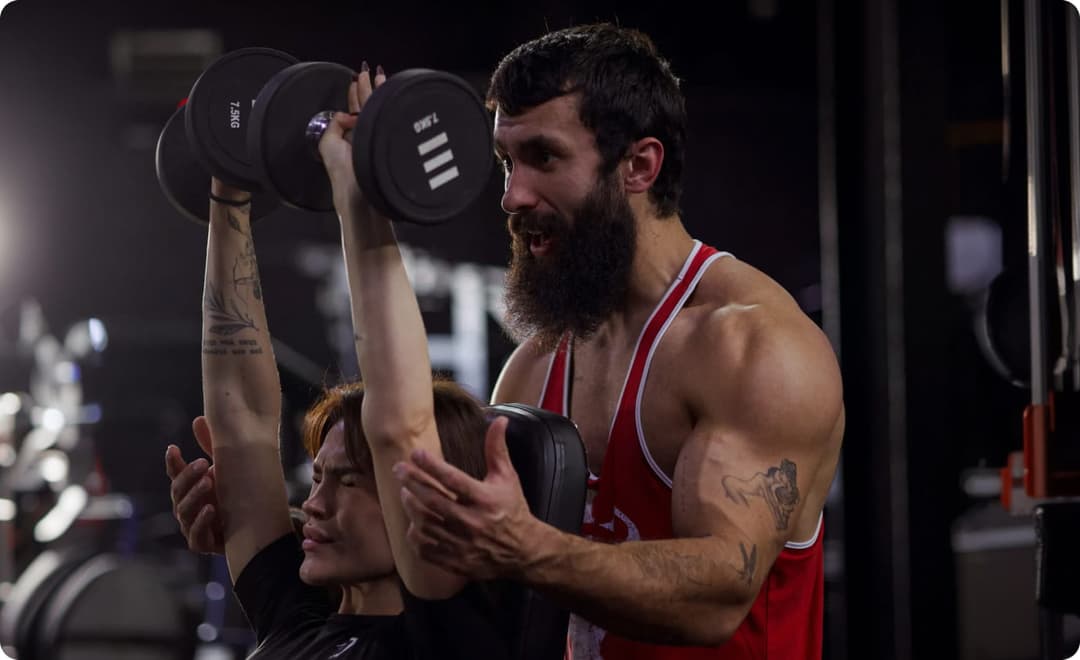
Proper technique begins even before the barbell leaves the rack. Vladimir Shmondenko recommends keeping your shoulder blades still, avoiding excessive elbow flaring, and lowering the barbell in a controlled manner rather than rushing through the movement.
These small adjustments reduce unnecessary strain on the shoulder joint and, over time, help you train with heavier weights more consistently.
Exercises That Shouldn't Be Skipped
Some drills stay in the program even if they don’t directly contribute to improving the bench press. In Anatoly’s workouts, face pulls are included on pulling days because healthy shoulders are just as important as a strong chest. They help train the rear deltoids, the upper back, and the muscles that keep the shoulder stable.
Anatoly also recommends YTWL exercises and simple external rotations as regular supplementary movements. They may not be the most challenging part of the workout, but performing them regularly makes it easier to continue working with heavy weights without turning every bench press session into a battle against shoulder pain.
Small Habits That Protect Your Rotator Cuff
Healthy shoulders are usually the result of small habits repeated week after week, not the result of a single perfect workout.
Gradually increase the weight;
Monitor the position of your shoulder blades;
Don’t skip the auxiliary exercises;
Allow at least one day for recovery between heavy bench press workouts.
The rotator cuff endures constant stress during the bench press. Paying regular attention to it takes much less time than treating an injury that would force you to stop training altogether.
Shoulder Pain Is a Signal, Not a Challenge
A shoulder that hurts every time you do a press doesn’t need more weight. It needs attention. If the discomfort keeps coming back or starts to get worse, temporarily reducing the load is usually a wiser decision than trying to keep training despite the pain.
Sometimes a short period of well-planned shoulder rehab is enough to get training back on track. Ignoring the problem usually leads to a much longer break than addressing it promptly.
Train Shoulders for the Long Run
Improving bench press performance is rewarding, but only by maintaining shoulder health can you continue to build that strength year after year. A few minutes spent today on preparation and auxiliary exercises can save you months of missed workouts in the future.
This is one of the principles on which the entire APS program is based. Anatoly builds strength through proper form, steady progress, and smart training habits, rather than relying solely on lifting heavier weights. When the shoulders remain strong and stable, every new personal record has a much more solid foundation.
Subscribe for Updates
By signing up for our newsletter, you agree to the terms outlined in our privacy policy. You can unsubscribe at any time.