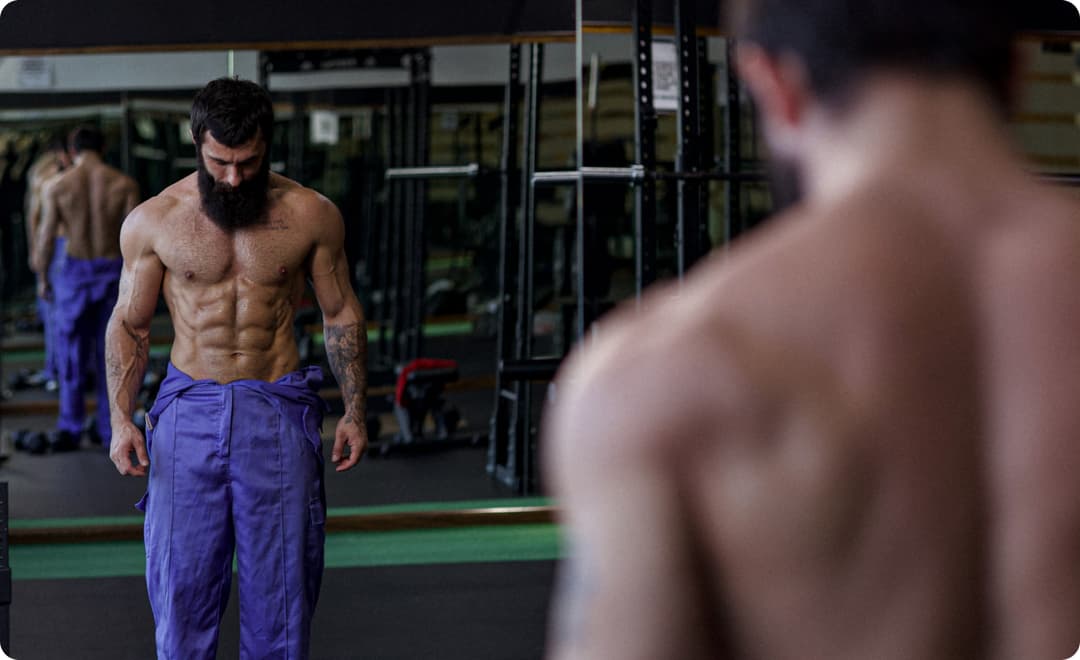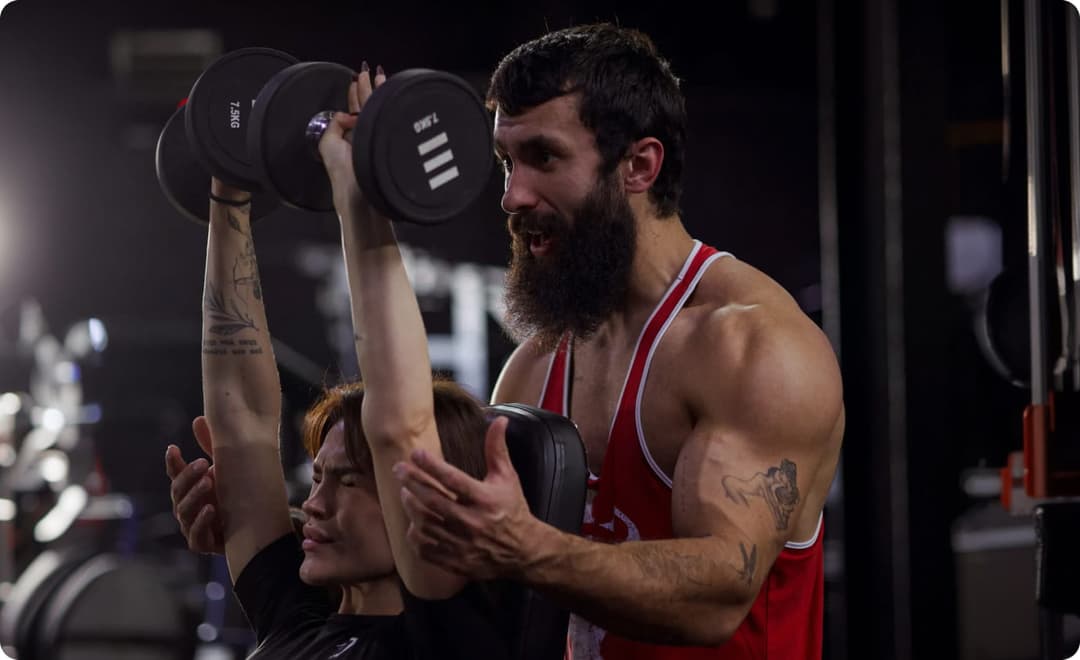
In Anatoly Fit's videos, Vladimir Shmondenko often looks smaller than the people watching him lift the barbell. But as soon as the barbell starts moving, appearances cease to be a reliable indicator of strength.
It’s tempting to attribute this to “strong tendons”, as if they worked independently of the muscles. That’s not the case. Muscles provide the strength, tendons transmit it, and technique determines how effectively that strength is transferred to the barbell. Isometric training develops the ability to generate and maintain tension without turning every workout into a quest for bigger muscles.
What Are Isometric Exercises?
During isometric exercises, strength increases while the working joint remains in a fixed position. The term “static” refers to the absence of external movement, not the absence of muscular effort. There are typically two types of such contractions:
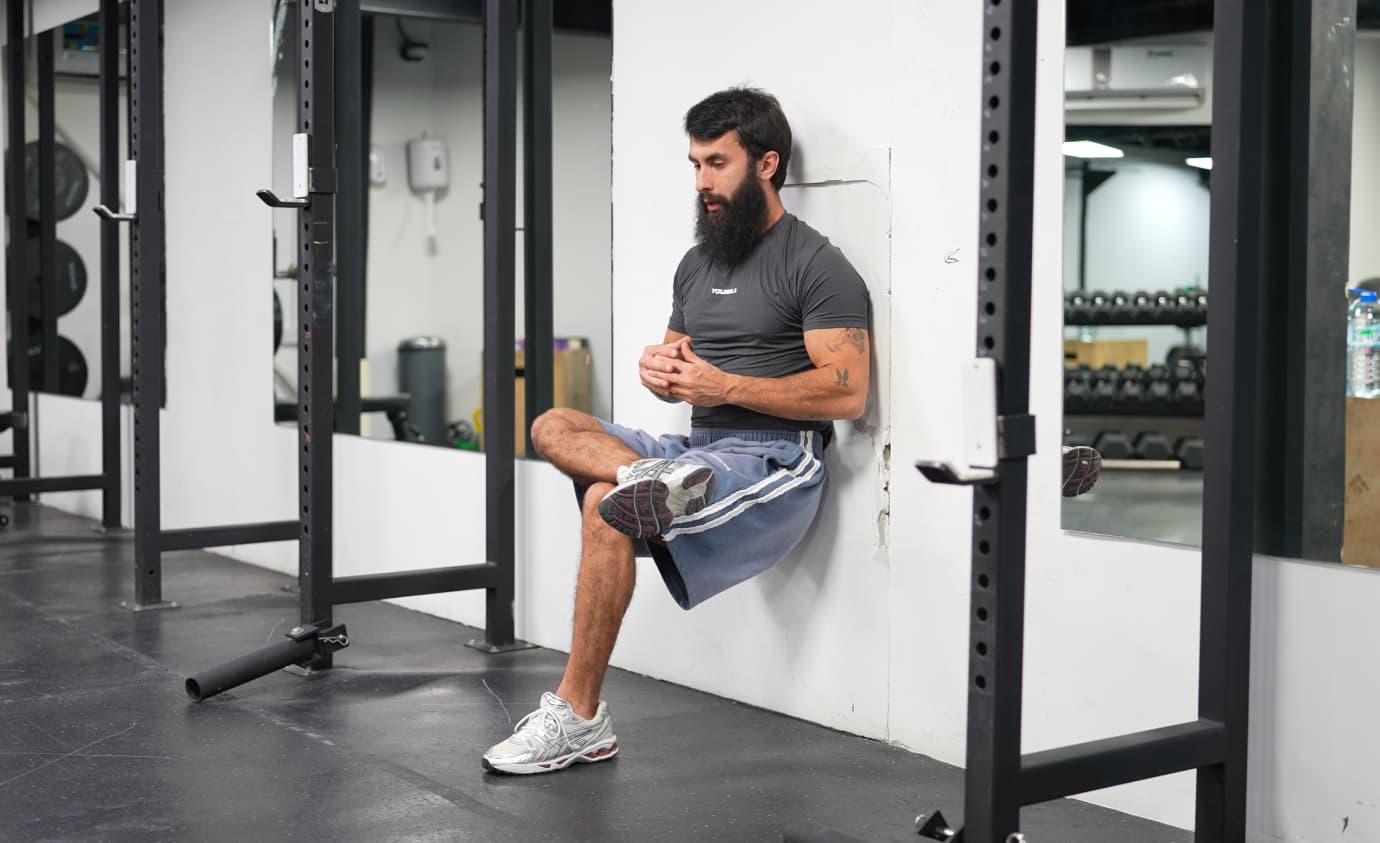
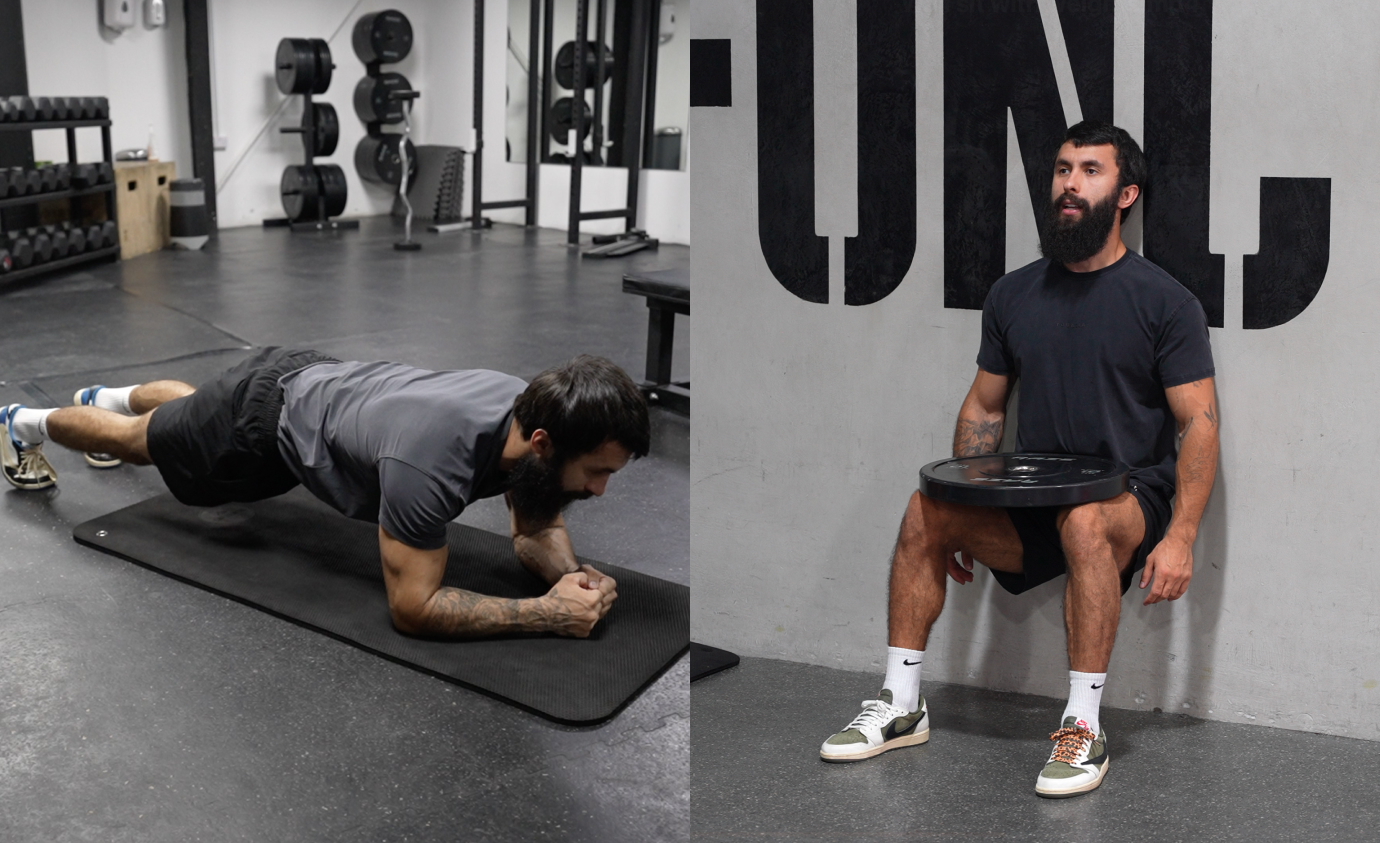
Yielding isometric. An external load attempts to change the position, while the athlete resists it. Wall squats or weighted squats with a pause are examples of a static hold.
Overcoming isometric. Overcoming isometric resistance. The athlete pushes or pulls against a resistance that cannot be moved. Pressing a barbell into fixed supports is one type of immovable object training.
The first variation develops the ability to hold a position under load. The second variation trains strength development at a specific joint flexion angle. Neither of them trains the full range of motion on its own, so the choice of variation should depend on the objective.
Is Statodynamics the Same as Isometric Training?
The term “statodynamics” typically refers to slow repetitions within a limited range of motion, performed without relaxing the working muscles. There may be pauses during a set, but the joint still moves between positions.
This makes this method a dynamic exercise involving continuous tension, rather than purely isometric training, during which the visible angle of joint flexion remains constant.
Can Isometrics Build Strength Without Bigger Muscles?
These exercises can increase strength even before the tape measure shows significant changes. Training at a fixed angle and more effective engagement of the working muscles can contribute to this, but muscle mass is never left out of the equation. Provided there is sufficient effort and volume, isometric exercises can also stimulate growth; they aren't a “shortcut” focused exclusively on tendons.
A 2025 meta-analysis combined data from 32 studies involving 621 healthy adults. Isometric training resulted in greater gains in isometric strength than dynamic training. However, when strength was measured during movement at a controlled speed, neither method showed a significant advantage. The body showed the most noticeable improvement in the specific type of exercise it was trained for. Since this review didn't look at changes in physical appearance, it cannot confirm the claim of increased strength without an increase in muscle mass.
What Does Tendon Strength Actually Mean?
“Tendon strength” is a convenient shorthand, but tendons aren't separate motors. The mechanism works more simply:
The muscle generates tensile force;
The tendon carries this movement to the bone;
Tendon stiffness describes how strongly the tissue resists stretching under load;
Tendon health also depends on its ability to withstand the constant loads placed on it.
From a practical standpoint, tendon strengthening means increasing this tissue’s ability to transmit and withstand progressively greater loads. This doesn’t mean that every tendon needs to be as stiff as possible.
Another systematic review was conducted on this topic. In total, 61 studies were evaluated, involving 763 participants. Regular mechanical loading resulted in a moderate increase in tendon stiffness, more significant changes in material properties, and minor changes in cross-sectional area. The most pronounced adaptive changes were observed in programs with high levels of deformation; however, no single type of contraction proved to be consistently superior to the others. Thus, static holds can serve as a useful stimulus; they don’t possess a unique tendon-strengthening effect that dynamic resistance lacks.
(ВСТАВКА КОЛАЖУ)
What Alexander Zass Got Right and What Needs Updating
Alexander Zass, a strength and conditioning athlete from the early 20th century, became inextricably linked with chain-stretching exercises and fixed-resistance training. His practical insights are still useful today: the size of a person’s muscles alone can’t tell us how much strength they’re capable of exerting in a certain pose.
This explanation needs to be updated. Tendons do not generate some kind of hidden force, and static work never occurs independently of the muscles. Strength results from muscle contraction. The peripheral nervous system controls this process, and tendons transmit the force. Zass has his place in the history of isometric training, but his terminology regarding “tendon force” should not be confused with the modern physiological model.
Where Does Static Strength Appear in Anatoly’s Lifts?
Static force is already an integral part of the basic movements in powerlifting, even though the lift itself is dynamic. In Vladimir Shmondenko’s case, this manifests itself whenever one part of the body must remain stationary while another moves:
During the deadlift, your fingers prevent the barbell from slipping out of your hands;
The torso prevents unnecessary motion of the spine when extending the hip and knee;
The upper back forms a “platform” that supports the barbell during squats;
Before starting and while performing the bench press, the upper back helps maintain proper body position on the bench.
As these muscles aren't totally immobile, their function is better characterized as predominantly isometric. In his own description of his workouts, Vladimir also mentions specific exercises for grip strength, the wrists, the abdominal muscles, and the core muscles. This doesn't prove that he follows a specific isometric system. It shows why static strength matters: some positions must be held steadily before force can be transferred during the lift.
How Can You Add Isometrics Without Replacing Main Lifts?
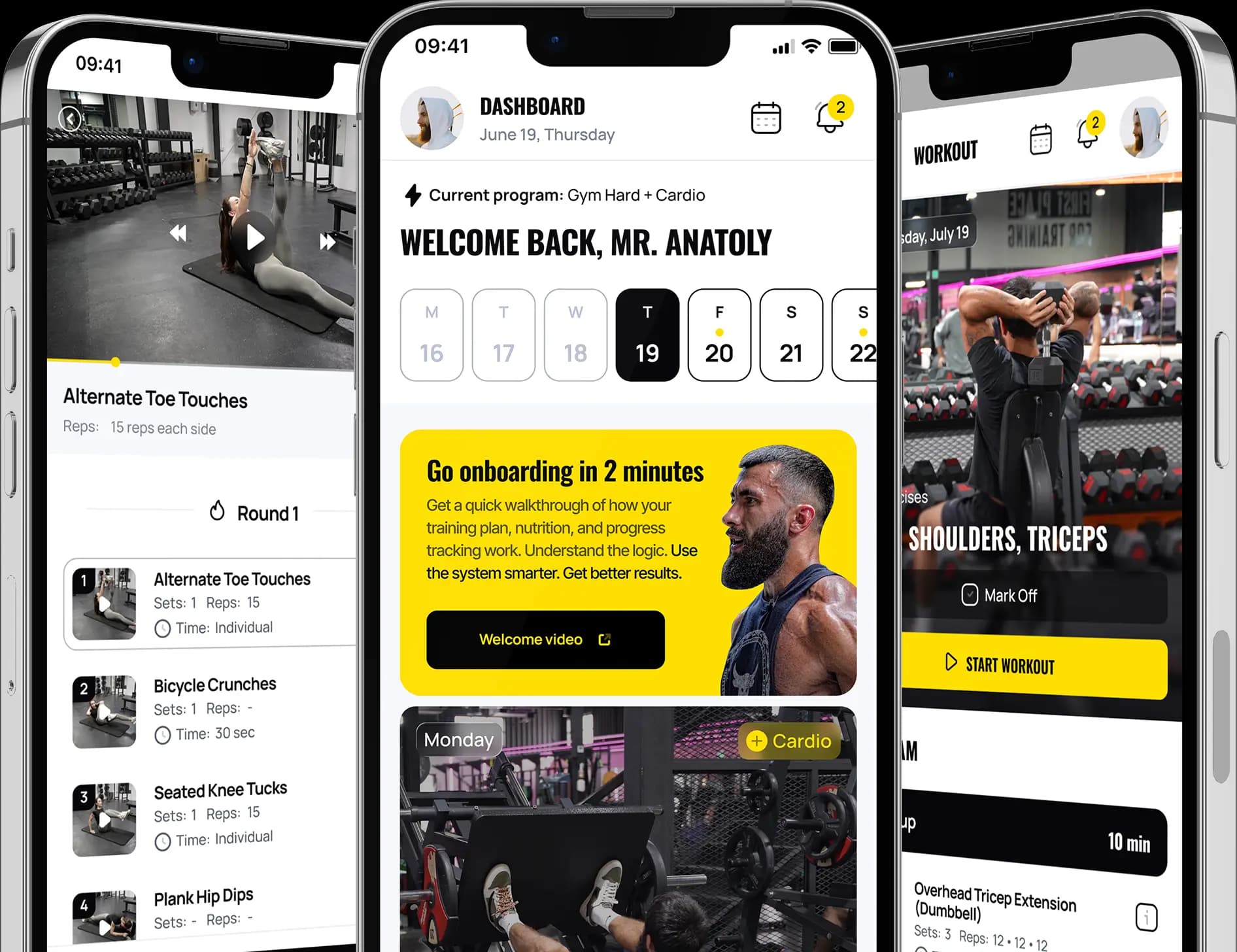
Separate static training may not always be necessary. For example, in the APS program, short finishing isometric exercises are performed after the corresponding dynamic ones. The main movement remains the same; holding the position adds resistance in a posture that requires overcoming fatigue.
APS program - Dynamic performance preserved - Currently valid isometric prescription:
Men Home Hard + Cardio - Dynamic Lunges — 4×18 each leg; Jump Squats — 4×15 - Wall Sit — 3 sets max
Men Home Hard + Cardio - Pull-Ups, Chin-Ups and Inverted Rows - Static Hold (Elbows 90°) — 2 sets max
Men Gym Hard + Cardio - Back, shoulder and grip session beginning with Barbell Deadlift — 1×2 - Plate Hold (Standing) — 3×max
These are exercises and recommendations for selecting exercises from programs based on Vladimir’s personal experience. Their order offers a useful lesson: first, practice the full range of motion, and then hold the corresponding position. “Max” should mean the longest possible flawless execution, which ends when the angle of joint flexion, grip, or posture noticeably changes. Track the load and the number of seconds, rather than relying on discomfort as proof of progress.
Track the Position, Not Only the Clock
Performance can only be compared if the conditions remain the same. Record the load, the angle of flexion in the joints, and the number of seconds of correct execution before your posture changes for the first time. Twenty seconds in the “wall sit” position with a shallower depth doesn’t constitute progress compared to fifteen seconds at the starting depth.
If performance improves in the hold but not in the squat, deadlift, or grip strength, then it’s likely that the athlete has simply gotten better at performing that specific exercise. The identical practical logic works in the APS system as well. Steady progress is achieved through constant results, rather than by how challenging a set of tasks may seem.
Static Strength Is Specific, Not Mysterious
Isometric exercises are effective, but not comprehensive. Holding a static position can strengthen your squat form, grip, or muscle tension; lifting weights dynamically, on the other hand, builds strength specifically during movement.
In the Anatoly system, the useful criterion isn't how uncomfortable holding a position was, but whether it made the planned exercise more stable and repeatable.
FAQ
Does shaking mean an isometric hold is working?
Not necessarily. Shaking can be a sign of fatigue or difficulty maintaining balance. It's not a reliable indicator of the quality of your workout.
Should you hold breath during a static hold?
Not during a prolonged submaximal hold. Controlled breathing helps maintain the position without creating excessive pressure.
Can isometric exercises help with tendon pain?
They can be used as part of rehabilitation programs, but they aren't a one-size-fits-all solution for pain relief. In cases of persistent or worsening pain, an individualized assessment is necessary.
When should isometrics be performed during a workout?
Short, high-intensity lifts are usually performed at the beginning of a workout, after the warm-up. Longer holds are generally best performed after the main strength portion of the workout.
Subscribe for Updates
By signing up for our newsletter, you agree to the terms outlined in our privacy policy. You can unsubscribe at any time.