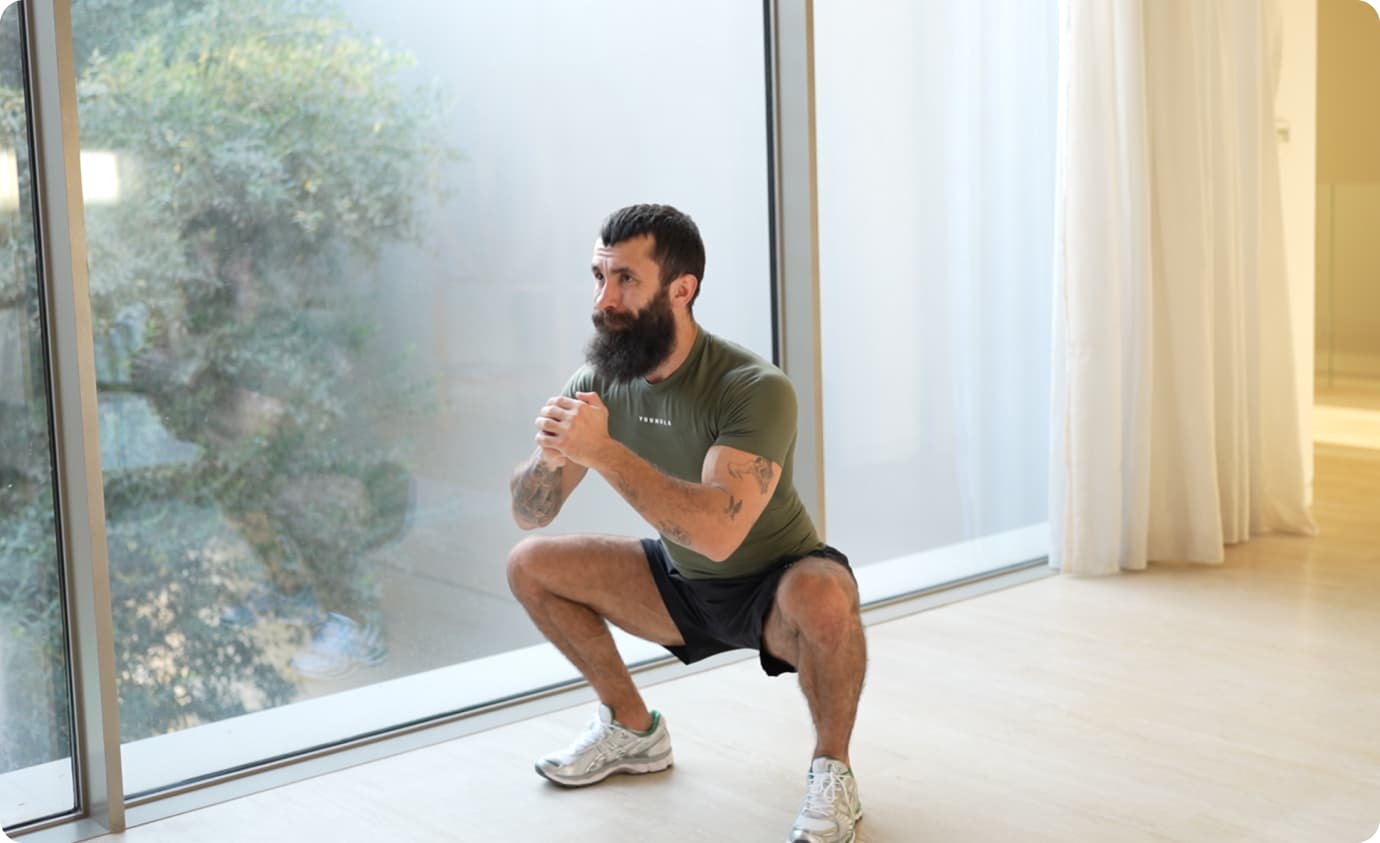
You arrive on vacation, pop into the hotel gym, and see a single treadmill, two light dumbbells, and a bench that doesn’t look all that sturdy. For many athletes, that’s where the workout quietly “ends”.
But the absence of a barbell doesn’t mean there’s nothing to do. It just changes the rules. Training on vacation can still maintain strength, control, and athletic movement if the session is structured. That’s exactly how Anatoly Fit approaches bodyweight exercises. It’s not a fallback plan. It’s a flexible and effective way to train when equipment is limited.
Bodyweight Training Is More Than Just Push-Ups
One common misconception is that bodyweight exercises are something people “give up” when they start strength training. In reality, advanced calisthenics can be extremely challenging even for strong athletes.
The difficulty lies in the use of leverage, maintaining balance, and control. Moving your entire body through space is different from moving an external load. A heavier barbell isn’t the only way to make exercise harder.
That is why bodyweight strength develops through a gradual increase in load, just as it does with traditional weightlifting. Changing body position, reducing support, slowing down the pace of repetitions, or adding pauses can significantly increase the difficulty of an exercise without adding a single pound. In many cases, these adjustments reveal weaknesses that are easily hidden during regular gym sessions.
Progression Still Exists Without a Barbell
The biggest mistake people make when working out on vacation is repeating the same light workout every few days and hoping it won’t lose its effectiveness. Strength increases when the intensity level changes. This principle applies both in the gym and when doing bodyweight exercises.
A few methods make exercises harder without adding equipment:
Fewer points of contact with the ground,
Slower lowering phases,
Pauses in difficult positions,
Unilateral work.
This is where different push-up variations come in handy. Eventually, regular push-ups may become too easy, but raising your legs, adding pauses, or switching to one-arm push-ups creates a whole new challenge.
The same goes for pistol squats. A single controlled repetition often requires more balance, flexibility, and coordination than people expect. Progress doesn’t stop when the barbell is gone. Sometimes it just starts to show up in a different way.
The Best Exercises for Vacation Training
Workouts while on holiday should primarily focus on the basic movements: presses, pulls, squats, and core-strengthening exercises. This will help to maintain the effectiveness of the training even with almost no equipment available.
A simple exercise routine might look like this:
Push-ups to build muscle mass and improve shoulder control;
Pull-ups or inverted rows, if a bar or stable surface is available;
Dips on horizontal bars, benches, or a solid ledge;
Pistol squats or single-leg squats to build leg strength;
Plank variations to strengthen core muscles.
This gives your body a good challenge without turning exercise into a sweaty mess. Perform the exercises correctly, take a break when your form starts to slip, and stop before your training turns into a punishment for being on vacation.
Outdoor Training Works Better Than Most People Think
A nice park can offer more opportunities than a subpar hotel gym. When exercise outdoors, look for sturdy handrails, stairs, benches, railings, or open spaces where you can safely perform movements.
This is where the logic of street workout comes in. You’re not trying to replicate a full gym session on the street. You’re using your surroundings for simple but intense exercises:
Pull-ups on a sturdy bar,
Lifts or jumps onto stairs,
Push-ups on an inclined bench,
Knee raises while hanging to train the core muscles.
First, check the surface, avoid unstable structures, and perform the exercises correctly. Outdoor training should be intense, but not reckless.
Add Speed and Power
Strength isn’t the only quality that’s lost when workouts become too monotonous. Speed and coordination also require regular practice. This is where plyometrics can come in handy.
A few basic exercises can be done almost anywhere:
Squat jumps,
Explosive push-ups,
Short uphill sprints,
Long jumps with controlled landings.
A small number of explosive exercises helps you stay in shape, especially during long breaks from your regular gym routine. Focus on quality, not fatigue. When your speed starts to drop, the set is usually over.
Use the Time Differently
A break doesn’t have to be just a time off from working out. Sometimes it’s a chance to focus on things that are easy to overlook during your regular gym workouts: movement quality, coordination, balance, and control.
A few weeks without the barbell won’t undo years of progress. It’s more important to stay active and keep up the habit. When the opportunity to train regularly arises again, getting back into it is usually much easier.
This idea is also reflected in the Anatoly Fit philosophy. The essence of his program isn’t about relying on specific equipment. It’s about continuing to move forward, even when your surroundings change.
Subscribe for Updates
By signing up for our newsletter, you agree to the terms outlined in our privacy policy. You can unsubscribe at any time.