Consistent workouts at the gym don’t always mean progress. Beginners can train to the point of exhaustion for weeks and still not notice any significant changes if the load, form, or training plan are chosen incorrectly.
In the Anatoly Fit program, progress starts with a simple idea: every set should have a specific goal. Before adding more weight, it’s worth checking to see if common mistakes often made at the gym are holding you back from making progress.
Is More Weight Always Better? The Problem With Ego Lifting
Heavier weights are only beneficial as long as you can still control them. Ego lifting begins when the number on the bar becomes more important than the repetitions themselves. The range of motion shrinks, the bar’s path changes, and inertia begins to do some of the work.
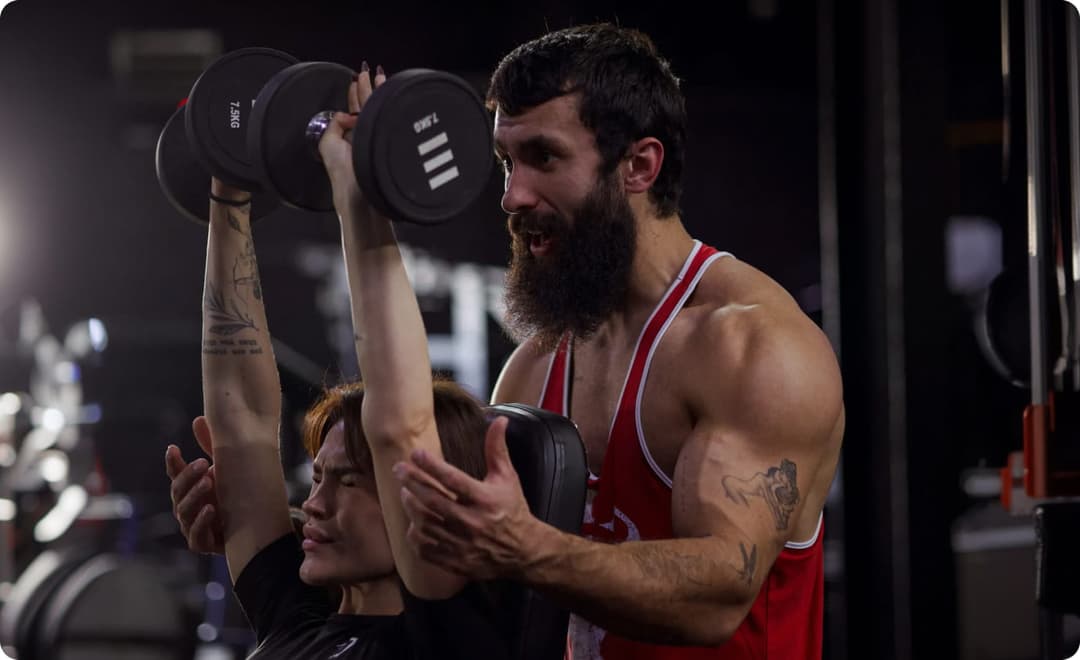
Heavy exercises can be performed slowly and with effort, while still maintaining proper form. The problem arises when you have to twist, jump, or rely on a spotter just to complete repetitions that should be done on your own.
That’s exactly why some of Anatoly the janitor’s pranks work so well: the contrast is obvious. He confidently handles heavy weights, while much more muscular athletes sometimes can’t even manage lighter loads.
Real progress comes from working with a load you can actually handle, not one you can barely manage.
What Happens When Proper Form Disappears?
Proper lifting technique isn't about making every repetition look perfect. It's about maintaining stability as the load increases.
Keep a few key points in mind:
Start each rep from a controlled position.
Maintain a consistent movement path.
Use a range of motion that you can repeat.
Don't let each rep turn into a different exercise.
This is also important for gym safety. It becomes harder to control the lift when the load, speed, and form are no longer in sync.
This contrast is often clearly visible in Anatoly’s prank videos. In one of his popular pranks at the gym, he comments on other athletes’ form and then demonstrates just how important control is when the weight gets heavy. It’s precisely this control that makes difficult lifts look almost effortless.
Why Does Random Training Lead to a Progress Plateau?
Constantly changing exercises can add variety to your workouts, but it also makes it harder to track progress. One week you’re doing bench presses, the next you switch to dumbbells, and then you replace both with something new. Before long, there’s nothing left to compare your progress to.
In the basic workout plan, you should record:
Main exercises.
Sets and repetitions.
Working weight.
Results from the previous workout.
You don’t have to stick to the exact same workout routine forever. But you do need to follow a certain sequence to see if you’re actually making progress. This is also part of the logic behind the Anatoly Fit program: progress should be the result of planned changes, not a weekly overhaul of every workout.
Do You Need to Train to Failure Every Time?
And the answer here is a resounding no. A set of exercises doesn't necessarily have to end with a failed repetition. A recent systematic review and meta-analysis, which included 20 studies and 556 participants, found no clear advantage for hypertrophy in workouts that are always performed to failure. Training without reaching failure even showed a slight advantage for dynamic strength.
Setbacks can certainly have a place in your workouts, but they shouldn’t turn every set into an ordeal. Chronic fatigue can also mask progress. A drop in performance, poor recovery, and muscle soreness that lasts longer than usual may seem like overtraining signs, although in reality they often indicate accumulated fatigue.
The goal is to train intensely enough for your body to adapt, not to leave the gym exhausted every time.
Are You Measuring Progress or Just Working Hard?
Feeling exhausted after a workout isn't proof that the program is working. To assess your progress, you need a baseline against which to compare your results over time.
Keep track of whether your results are improving in at least one area:
Working weight.
Number of repetitions.
Proper form with a constant load.
Total training volume.
It’s not necessary for all metrics to improve every week. But if none of them change over a long period of time, you may have hit a progress plateau. In this situation, simply training harder is rarely the best solution. It’s better to reassess your workload, recovery, and the structure of your workout plan.
Train Smarter Before You Train Heavier
Most of the gym mistakes that beginners make boil down to the same problem: trying to do more without first learning how to perform the basic exercises correctly.
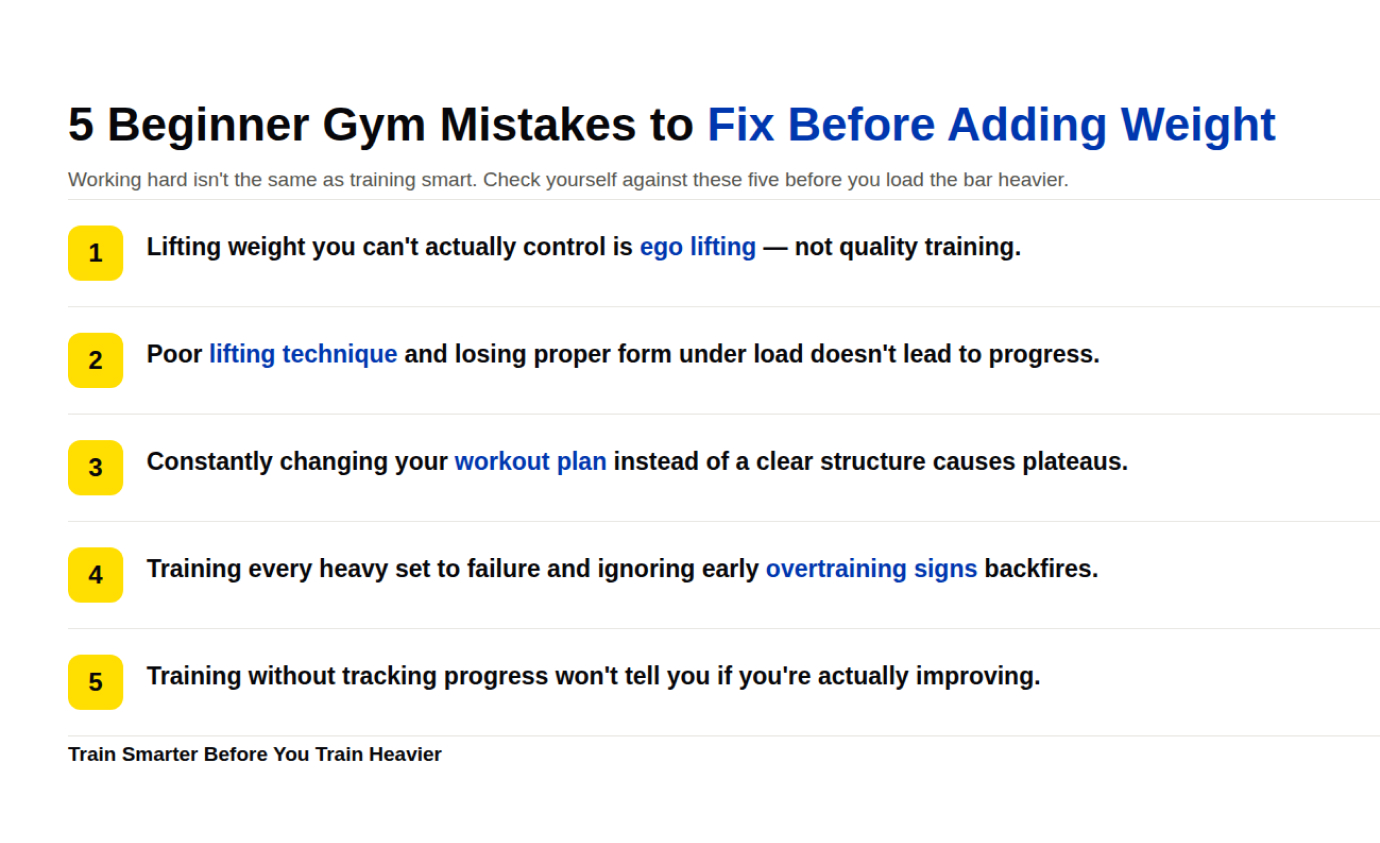
Getting stronger doesn’t mean adding weight plates at any cost. The better goal is to lift heavier weights while maintaining control over the movement.
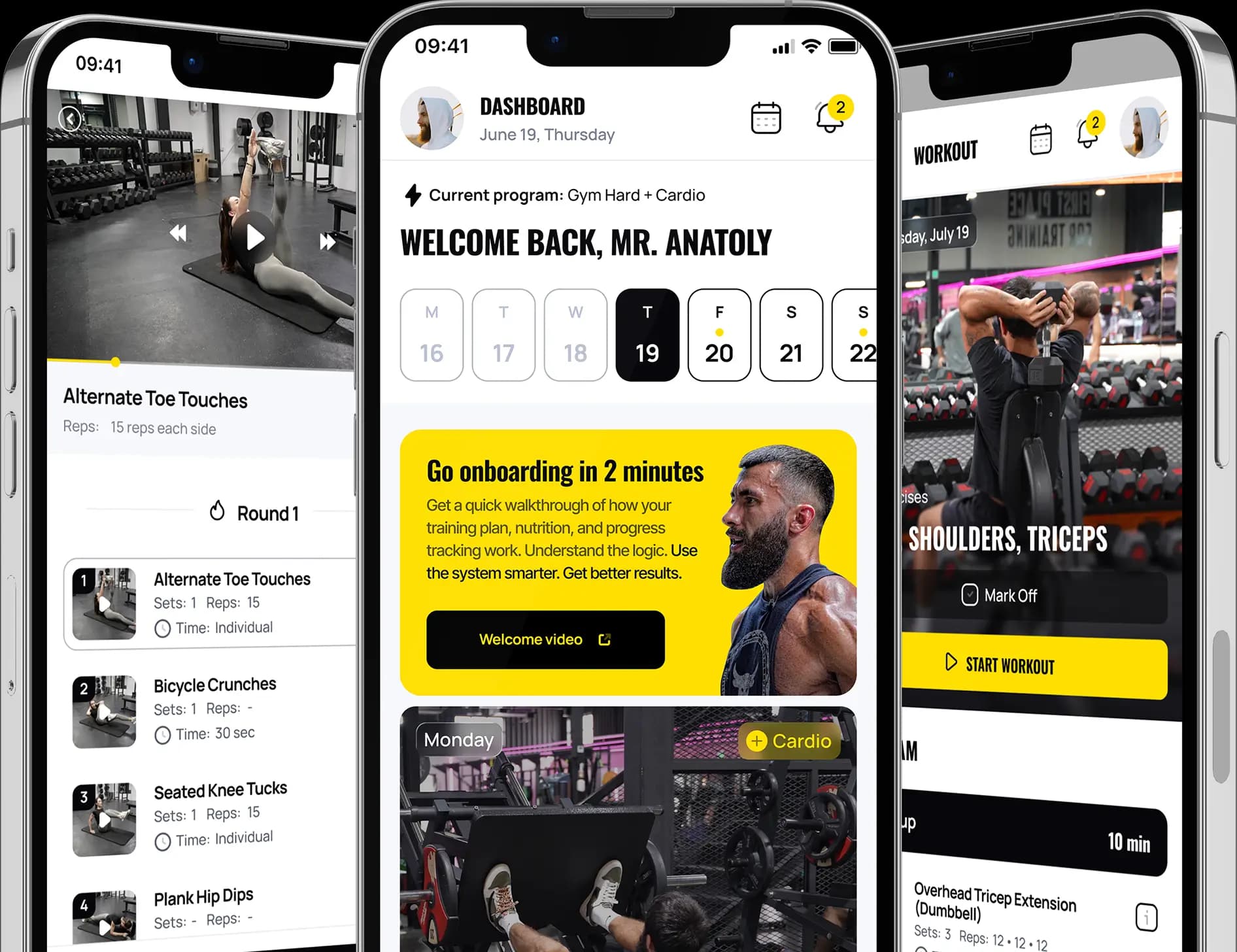
This is the foundation of the Anatoly Fit approach: creating a clear training structure, tracking your progress, and increasing the load when your current fitness level is ready for it.
FAQ
How often should a beginner add more weight?
When the load feels consistent throughout all planned repetitions. If the last few repetitions are performed without any mistakes, it may be a good idea to slightly increase the weight.
Is some technique breakdown normal on heavy sets?
It's normal to perform the exercise more slowly. But losing control or changing the entire movement — that's not normal.
How long should I follow the same workout plan?
Long enough to see the real trend. One unsuccessful session isn't a reason to change the program.
Should beginners test their one-rep max?
Not necessarily. Consistent sets usually provide more information at the beginning than a single maximum lift.
Subscribe for Updates
By signing up for our newsletter, you agree to the terms outlined in our privacy policy. You can unsubscribe at any time.